
Home » Retrograde Motion » Page 2

Retrograde Motion

An astronomical optical illusion resulting from the differing orbital velocities of Earth and other celestial bodies, causing a planet to appear to move backward against the background stars. Astrological texts operationalize this phenomenon as a period of delay, revision, structural internalization, or procedural malfunction.

Filters

Filters


See more See less
See more See less
See more See less
See more See less
See more See less
See more See less
See more See less

Sorting

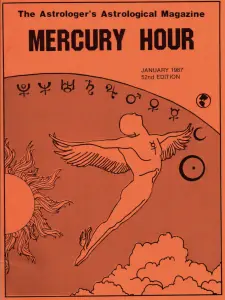
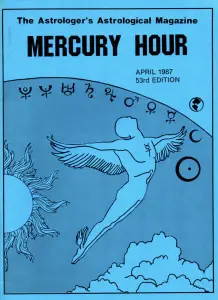
Mundane Astrology, Predictive Astrology, and Astrology History. This archival item is the April 1987 issue (53rd Edition) of Mercury Hour, a quarterly magazine edited by Edith Custer and Jewell Cook-Fahey in Lynchburg, Virginia. Key contents include Dorothy Willis’s astro-meteorological forecasts for the 1987 Vernal Equinox, Ann Kreilkamp’s analysis of the Saturn-Uranus conjunction in Sagittarius, and Sigvard Mahlerdam’s study of the Aztec Tonalpohualli prophecy calendar. Additional features include Marc Penfield’s chart rectifications for U.S. historical events and San Francisco tragedies, Stephen Brown’s analysis of the Hiroshima atomic bombing, Charlotte Tuton’s speculative chart for Sunny Von Bulow using the Wynn Key Cycle method, book reviews by Marion March, technical columns by Ted George and Howard Stephen Berg, an exchange between Thomas G. Shanks and Jack F. Chandu on international time data, and birth chart data for figures in the Iran-Contra scandal.


[Note: this issue is missing pages 31-32, which, according to the index, was an
advertisement for the Seven Hills Astrology Conference.]
Issue Highlights
Book Reviews
By Marion March
Your Fertile Hours – Emily Faugno
The Book of Houses – Robert Cole
Life Clock, Volume II – Bruno and Louise Huber
The Twelve Healers of the Zodiac, The Astrology Handbook of the Bach Flower
Remedies – Peter Damian
The Art of Chart Interpretation – Tracy Marks
Astrological Megatrends 1996 – Edward J. Kluska
Your Greatest Strength – Grant Lewi
***
A Graphic Ephemeris of Sensitive Degrees – Eleanor Bach by Rochelle Gordon
Delineation of Progression – Sophia Mason by Jorja Brentwood
Articles
Astrology and the Weather, Vernal Equinox 1987 – Dorothy Willis
Unreliable Data in “The International Atlas” – Thomas G. Shanks [from Jack F.
Chandu]
Saturn/Uranus in Sagittarius: Conceptual Repatterning – Ann Kreilkamp
TONALPOHUALLI, The Prophecy Calendar of the Aztecs, Part I – Sigvard Mahlerdam
The Heart Center Library – Michael Erlewine
Art and Astrology – Ellen Price
Prospects for a Golden Age – E. Alan Meece
Astrology and the Weather, Forecasting the Weather – Dorothy Willis
Sideral Astrology: Influence of the Houses, Part II – Keven W. Barrett
Relationships and Astrology, Part II – Klara Henderson [Reprinted from “Astrology”]
Tragedies in San Francisco – Marc Penfield
The World’s Biggest Franchise – Marc Penfield
Tourette Syndrome, A Bewitching Disease – Ted George
Down to Earth Astrology [statistics]– Howard Stephen Berg [column]
Astrological Bible Quotes – Elizabeth McCumsey
The Progressed Horoscope of the United States of America, Part I – Marc Penfield
Hiroshima – Stephen Brown
The Language of Astrology – Mindy Krupp
Page 1 of 2


Articles (continued from previous page)
Sunny Von Bulow’s Chart, A Modest Speculative Proposal and The Wynn Key Cycle
Formula, A Valuable Predictive Tool – Charlotte Tuton
Numerology and the Names of Cities – Marc Penfield
Reagan’s Real Ascendant?, Part II – John Kalus
Reinterpreting the Basics, Part II – John H. Roth, Jr.
Lunar Notes – Wendy Hawks
Astrology in Brazil – Jeff Jawer
Discussions
First of the year Ephemeris for the Christian Era.
Astrological correspondences of chemical elements, glands, health conditions.
Neptune.
Eli Cohen, Israeli spy.
Astrological weather forecasting in the Southern Hemisphere.
Mass/serial killers.
The Pymander and Hermes-Thoth.
AFA/AFAN controversy.
Chart data
(some incomplete or in question)
Casey, William
McFarlane, Robert
Meese, Edwin
Poindexter, John
Regan, Donald T.
Schultz, George
Weinberger, Casper W.
(above charts related to Iran-Contra
scandal)
Iacocca, Lido
Knight, Ted
Lennox, Annie


Savitch, Jessica (correction)
Marc Penfield’s Chart Mart charts
Bergman, Ingrid
Eklund, Britt
Garbo, Greta
Shepherd, Cybil
Castro, Fidel
Boyd, Malcolm
Stuyvesant, Peter
City of Los Angeles


Notable contributors
Joylyn Hill (Neptune/Tarot-astrology correspondences.)
Marion March and Lillian Huber (Critique of AFA column “Basic Horoscope
Interpretation” and rebuttal from Dorothy B. Maass.)
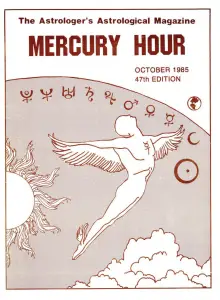
Astrological Techniques, Astrology History, and Mundane Astrology. This archival item is the October 1985 issue (47th Edition) of Mercury Hour, a quarterly magazine edited by Edith Custer and Jewell Fahey in Lynchburg, Virginia. Key contents include technical articles such as John F. Gay, III’s guide to calculating house cusps and astronomical coordinates using scientific calculators, Joan McEvers’s second installment on interpreting Lunar Returns, and Dorothy Willis’s foundational rules for astro-meteorology. Mundane and historical pieces feature Marc Penfield’s chart rectifications for Russia’s 1917 Bolshevik Revolution and the “Chart Mart” data collection, Fran Rosen’s explorations of the Kabbalistic Tree of Life and Tarot symbolism, and Gilbert Navarro’s definition of horary astrology. Additional contributions include reviews by Marion March, reports on the 7 Hills Astrological Conference, an analysis of the 1985 Bradford football stadium fire by Olivia Barclay, and reader discussions surrounding topics such as ethics, licensing, house systems, and birth data for figures like Ronald Reagan, Mikhail Gorbachev, and Mary Baker Eddy.


Issue Highlights


Book Reviews

By Marion March:

Celestial Psychology: An Astrological Guide to Growth and Transformation by Doris A. Hebel

Astrochemistry: A Study of Metal-Planet Affinities by Nick Kellerstrom

Instant Astrology by Mary Orser, Rick and Glory Brightfield

The Astrology of Deep Space by Philip Sedgwick

Spiritual Astrology: A Layperson’s Guide to Self-Unfoldment by Jan Spiller

The Practice and Profession of Astrology by Stephen Arroyo

Birth Pattern Psychology by Tamise Van Pelt

The Astrological Prayer Book by Alda Marian Jangl
Your Key to Astrology [book plus] Astrological Key Cards: Planets, Signs, Houses, Aspects by Bill Hansen – Edith Custer


Articles

Astrology and the Weather – Dorothy Willis

Lunar Return Notes, Part II – Joan McEvers

Calculation Without Tables of the Julian Day & Century, Obliquity of the Ecliptic, MC, ASC, and Houses, Part I – John F. Gay, III

The Tree of Life: An Overview – Fran Rosen

Astrological Hall of Fame Awards – Fraternity for Canadian Astrologers [2nd National Conference]

Along the Tarot Path – Fran Rosen

How I Survived my Pluto Square Pluto and Other Transits – Carol Hemingway

The Luscher Color Test, A Symbolic Testing Model – Zan Key

Observations on Astrology, Original & Borrowed – John F. Gay, III

I’m Mad at You!!!! – Mary Ellen Glass

The Horoscope of Russia – Marc Penfield

Chart Mart – Marc Penfield

A Trip Round the Hawaiian Zodiac, Part II – Cheryl Niggle

Astrology and the Weather: Forecasting the Weather, Part I – Dorothy Willis

Horary Astrology: A Definition – Gilbert Navarro

The Business Cycle, Part II – Bill Hansen

Neptune, The Collective Fantasy, and Popular Music – Amy Franco

The Mystery of the Chinese Zodiac, Now Revealed for the First Time – Frank Hampton

The Qualities of Time, Part I – Tundra Wind


Discussions

Astrology, licensure, & ethics

Quadrant house systems vs. Equal Houses

Radix-based Tarot technique

Natal location in Return chart

Birth time of Ronald Reagan

Seven Hill Astrological Conference [reports]

Mercury retrograde


Chart data

Anderson, Loni
Benetar, Haley (daughter of Pat Benetar)
Bowie, David
Eddy, Mary Baker
Eisenhower, Melanie (daughter of Julie Nixon and David Eisenhower)
Gorbachev, Mikhail
Jagger, Elizabeth (daughter of Mick Jagger and Jerri Hall)
Kennedy III Robert F.
Morgan, Vicki
Neves, Tancredo
Pace, Canio and Thomas (cross-year twins)
Reagan, Ronald
Schwab, Loluis and Leona (cross-year twins)
Spielberg, Max (son of Steven Spielberg and Amy Irving)Vaughn, Sarah

Frustaci sextuplets
Czar Nicholas II
Prince Henry

Air India 747 jetliner crash
Christian Science Church
Formation of the Soviet Union
Founding of Tel Aviv
Halley’s Comet return
Live Aid Concert 1985


Notable contributors

Joylyn Hill (Chart of Israel, chart of Robert E. Lee, the nature of Venus)

Olivia Barclay (astrological signature of fires and explosions)

Misty Kuceris (7 Hills Conference)

Robert Pelletier (7 Hills Conference)

Zane Stein (Solstice points, Sabian symbols)

Erin Sullivan (Mercury retrograde)

Michael and Margaret Erlewine (Matrix Heart Center)

Eleanor Bach (Marc Edmond Jones Award)

Lee Lehman (Kundalini and asteroid Sappho)

Vesta: Keeper of the Flame (1994)

Frances McEvoy, Special Collections

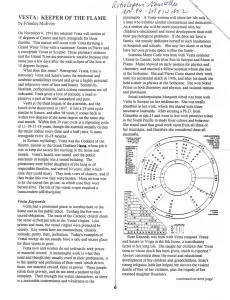
Asteroid Vesta, Grand Trine, Natal Astrological Analysis, Confinement and Solitude, Birth Data. This issue features an in-depth astrological analysis of the asteroid Vesta by Frances McEvoy, framed by Vesta’s November 1994 station at 10 degrees Cancer forming a Grand Water Trine with Saturn in Pisces and Venus in Scorpio. McEvoy explores Vesta’s 29-year cycle, its mythological roots as the Goddess of the Hearth, and its archetypal keywords such as commitment, chastity, solitude, purity, duty, perfection, and transcendent self-discipline. The article delineates how Vesta operates in both male and female charts, highlighting themes of dedicated work, privacy, and inner strength.

The study examines numerous chart examples illustrating Vesta’s impact on public service, science, art, and personal sacrifice. Detailed case studies include Marie Curie, Margaret Mead, Maria Montessori, Anne Frank, Sister Francesca Cabrini, Saint Therese of Lisieux, Queen Victoria, Grace Kelly, Jerry Brown, David Souter, Yassar Arafat, Oliver North, Angela Davis, Betty Friedan, Helen Keller, Michel Gauquelin, Bobby Fischer, and major classical composers like Bach, Mozart, Schubert, and Chopin. Themes of confinement, religious devotion, political zealotry, and intellectual immersion are thoroughly traced through Vesta’s aspects and house placements.

Additionally, Lorraine Welsh presents “The Data Base,” providing precise birth data for political candidates and public figures of the period, including Mitt Romney, Joe Malone, Paul Cellucci, and Pope John Paul II. An informational announcement for Robert Hand’s instructional classes on Traditional Western, Renaissance, and Hellenistic astrology is also included.

Issue Highlights:

Articles:
VESTA: KEEPER OF THE FLAME – Frances McEvoy
The Data Base – Lorraine Welsh

Discussion:
Vesta cycle and astronomical station patterns
Vesta in psychological, natal, and mundane astrology
Confinement, solitude, and religious devotion in chart analysis
Verified birth data for political candidates and notable figures
Instruction in Hellenistic and Renaissance traditional astrology

Chart data:
Maria Montessori
Yassar Arafat
Helen Keller
Mitt Romney
Joe Malone
Paul Cellucci
Pope John Paul II (Karol Wojtyla)

Notable contributors:
Frances McEvoy (Vesta: Keeper of the Flame)
Lorraine Welsh (The Data Base)
Robert Hand (Traditional Astrology Classes)

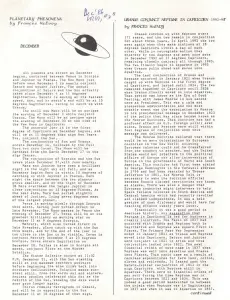
Planetary Phenomena, Uranus Conjunct Neptune in Capricorn, Historical Mundane Astrology. This detailed astrological and historical analysis by Frances McEvoy explores the upcoming conjunction of Uranus and Neptune in Capricorn (1992-1995) and compares it extensively with the historical Uranus-Neptune conjunction of 1821-1828. The author examines planetary movements for December 1986, including planetary aspects, ingresses, and general phenomena. The main focus is a deep dive into mundane astrology, examining how the Uranus-Neptune conjunction in Capricorn correlates with major societal, industrial, and political shifts, such as the Monroe Doctrine, the rise of the working class, utopian socialism, Robert Owen’s experiments, and significant architectural and literary movements.

Issue Highlights:
Detailed astrological ephemeris data for December 1986 and an exhaustive historical correlation of the Uranus-Neptune conjunction in Capricorn, looking ahead to the 1992-1995 alignment.

Articles:
Planetary Phenomena – Frances McEvoy
Uranus Conjunct Neptune in Capricorn 1992-95 – Frances McEvoy

Discussion:
Planetary movements for December 1986
Historical analysis of the 1821-1828 Uranus-Neptune conjunction in Capricorn
Mundane astrological effects on labor, industry, and social reform
Architectural revivals and romanticism during Uranus-Neptune cycles

Chart data:
N/A

Notable contributors:
Frances McEvoy (Astrological and historical analysis)

Astrology, Horary, House Systems, Synastry, and Transits. This edition of Mercury Hour features extensive reader discussions and technical articles covering various astrological branches. Topics include an exploration of planetary speeds and Kepler’s theories by Donald E. Byrne, declination and out-of-bounds planets by Gilbert Navarro, synastry and musical charts comparing John Lennon, Paul McCartney, Richard Nixon, and Yoko Ono by Dianne Lawson, as well as a concluding critique of the Koch House System by M. J. Makransky. Additional articles cover astrolocality mapping variants, Russian history and charts by Annibale F. Verzumo, Vernal Equinox charts, I Ching trigrams, and book reviews covering computer software, house development, and planetary stations.

Issue Highlights:

Articles:
Where is Vulcan & Nemesis? Part I – Donald E. Byrne
John Lennon and Paul McCartney, Richard Nixon, and Yoko Ono – Dianne Lawson
The Last Word on the Koch House System and Further Critique of the Koch House System, Part II, Conclusion – M. J. Makransky
Precession of the Equinox – Donald E. Byrne
How to Make Astrology Pay From A-Z, Part II, Conclusion – Adze Mixxe
Variant Forms of Astrolocality Mapping, Part I – M. J. Makransky
[Russia] Part III, Conclusion – Annibale F. Verzumo
Vernal Equinox March 20, 1992 – Dorothy S. Willis
Corrections: The Book of World Horoscopes – Nicholas Campion
I Ching: The Trigrams-Fu Hai Arrangement – Dorothy J. Sarka

Discussion:
Transpluto/Pluto Square 1991 – 1993
December 21, 1991 lunar eclipse
Secondary progressions
CSICOP and Humanistic astrology
Antichrist and Judgement Day discussions
Gulf War charts and Horary missing articles

Chart data:
Bill Clinton
Paul Keating
John Lennon
Paul McCartney
Richard Nixon
Yoko Ono
Paul Tsongas

Notable contributors:
Marion March (problematic astrological terminology)
Gilbert Navarro (declination)
Lee Lehman (humanism and CSICOP)
Diana Rosenberg (Jeffrey Dahmer chart)
Edith Custer (defending astrology)

Mundane Astrology, Astrological History, and Astrological Techniques. This archival item is the July 1984 issue (42nd Edition) of Mercury Hour, a quarterly astrological magazine edited and published by Edith Custer in Lynchburg, Virginia. Key contents include legal and advocacy discussions surrounding the municipal “fortune telling” arrests of astrologers in San Jose and Los Angeles, alongside the organizational development of the Astrological Network (AFAN) and its relationship with the American Federation of Astrologers (AFA). The issue features articles such as Danni Herman’s “An Astrological Anatomy of Behavior,” Ted George’s exploration of “Paragon” (a proposed satellite of Mercury), Jack Fertig’s compilation of AIDS case data, and Marc Penfield’s “Chart Mart” containing extensive birth data for public figures and speculative horoscopes for historical events. Additional contributions cover reviews of books by Linda Carbone, Liz Greene, Stephen Arroyo, and Barry Lynes, as well as reader discussions on karma, heliocentric planetary applications, and chart data for figures such as Ronald Reagan, George Bush, and Jesse Jackson.


Issue Highlights 


Book Reviews


Interpreting Your Retrograde Planets by Linda Carbone – Marion March


The Jupiter/Saturn Conference Lectures by Liz Greene and Stephen Arroyo – Marion March


Astroeconomics: The Union of Astrology and Economics by Barry Lynes – Marguerite Dar Boggia


The Astrology of Choice by Roy Alexander – Carolyn Dodson


The Cosmic Informer by Robert Pelletier and Leonard Cataldo – Edith Custer


Articles


An Astrological Anatomy of Behavior, Part IIB – Danni Herman


Paragon, the Twin of Mercury – Ted George


IAO Research Center News – Robin Armstrong (President)


Houses – Marc Penfield


Uranian Astrology – Penny Bertucelli


Neptune – Terri Kerins


AIDS Data – Jack Fertig


Creativity – Defiance Gregg


AFA/AFAN – Jeff Jawer


Astrology and the Law – Angel Thompson


Magic, Madness, and a Cancer Stellium – Amy M. Franco


Astrology and its Implications for Education of the Gifted – Lynette Nygaard


Astrology Now – Bonnie Parker [Humanistic Astrology]


Discussions


Karma and reincarnation


Charts of Ronald Reagan and George Bush


1984 Korean airliner shooting


Chart of Kansas City


San Jose, CA and Los Angeles, CA “Fortune Telling” legal cases


Chiron


Charts of USA and American Civil War


Taurus degrees


Chart data


(some incomplete or in question)           

(Marc Penfield’s Chart Mart appended)


Andropov, Yuri
Diamond, Neil
Glenn, John
Jackson, Jesse
Olivier, Lawrence
Westmoreland, William
Williams, Tennessee


Foundation of Russia


Notable contributors


Al H. Morrison
Marion March


Additional Chart Data 


From Chart Mart – Marc Penfield


“Some more from Gauquelin’s new book on American birthdata:”


Annenberg, Walter
Banks, Ernie
Black, Karen
Browning, John
Cage, John
Davis, Miles
Chandler, Otis
Felker, Clay
Fleischer, Leon
Gibson, Althea
Greene, Joe
Grier, Roosevelt
Hirsch, Elroy
Hutton, Lauren
Janov, Arthur
Jones, Jack
Jurgensen, Sonny
Kahn, Madeline
Lawrence, Carol
Lopez, Nancy
McCambridge, Mercedes
Maris, Roger
Martin, Billy
Masters, Wm. H.
Moore, Terry
Naber, John
Patchen, Kenneth
Patterson, Floyd
Poston, Tom
Rigby, Cathy
Salinger, Pierre
Schorer, Mark
Simon, William
Simone, Nina
Summer, Donna
Valenti, Jack
Warwick, Dionne
Williams, Cindy
Williams, Ted


Additional charts from Penfield:


Cruise, Tom
Daltry, Roger
Fairchild, Morgan
Hepburn, Audrey
Holmes, John
Keynes, John Maynard
Koestler, Arthur
Lupino, Ida
Mandrell, Barbara
Moore, Dudley
Newton-John, Olivia
Roberts, Xavier
Sanders, Col. Harlan
Savalas, Telly
Stewart, Rod
Updike, John


Mehmet Ali Agca
(speculative chart) 


Vancouver, BC

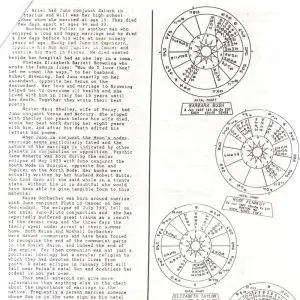
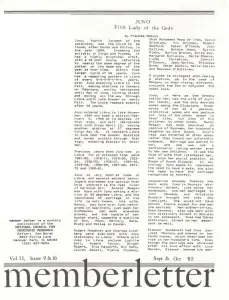
Asteroid Juno, Marriage, Power Struggles, Prominent Figures. This article explores the astrological significance of the asteroid Juno, known in mythology as the wife of Zeus and queen of the gods, focusing on her role in partnerships, marriage, jealousy, fidelity, and power dynamics. The author examines Juno’s orbital cycles, particularly its movements in Capricorn and Aquarius, and analyzes its placement in the natal charts of numerous historical figures, celebrities, and political leaders. The text highlights how prominent women often feature strong Juno placements, connecting the asteroid to public fame through marriage, career support, or notable domestic struggles.

Issue Highlights:

Articles:
JUNO: FIRST LADY OF THE GODS – Frances McEvoy

Discussion:
Astrological significance of the asteroid Juno
Juno’s cycles and stations in Capricorn and Aquarius
Juno in natal charts of political figures and celebrities
Connections between Juno aspects and marriage, divorce, and widowhood

Chart data:
Barbara Bush
Rose Kennedy
Elizabeth Taylor
Eleanor Roosevelt

Notable contributors:
Frances McEvoy (Astrological analysis of the asteroid Juno)

Astrology, Ephemerides, Mundane Forecasts, Predictive Techniques, Chart Rectification, and Esoteric Studies. This issue of Mercury Hour explores a wide array of specialized astrological topics, ranging from generational planetary cycles and weather forecasting to tarot associations and historical chart rectifications. Ann Kreilkamp examines the Uranus/Pluto in Virgo generation (1962–1968), highlighting the revolutionary tendencies and psychological profiles of individuals born during this period. Robert Cole discusses the reliability of economic and meteorological forecasting against statistical probability in ‘The Prediction Game’ and outlines cycles in ‘The Aquarian Agenda’ and ‘The Tenth Aquarian Age.’ Marc Penfield contributes multiple articles analyzing market trends, the Southern States of the Confederacy, county incorporation dates, and the natal chart of Tina Turner (‘Hot Legs from Nutbush’). Other notable contributions include Lew Paxton Price’s study on astrology in the Bible, Dorothy Willis on weather forecasting via Saturn and Uranus transits, Kevin W. Barrett on Sidereal house influences, John H. Roth, Jr. on reinterpreting astrological basics through tarot and equilibrium systems, and Frank Faustino on numerical keys to Einstein’s unified theory. The magazine also features extensive book reviews by Marion March, letters, data exchanges, and discussions surrounding astrological organization politics within the AFA and AFAN.

Issue Highlights:

Articles:
A Flood Warning for New Year’s – Nancy Ray
The Uranus/Pluto in Virgo Generation 1962-68 – Ann Kreilkamp
The Prediction Game – Robert Cole
The Market Goes Up and Down – Marc Penfield
Massacre or Escape? – Marc Penfield
The Aquarian Agenda – Robert Cole
Astrology in the Bible, Part I – Lew Paxton Price
Down to Earth Astrology – Howard Stephen Berg
Reagan’s Real Ascendant, Part I – John Kalus
Astrology & The Weather, Forecasting the Weather – Dorothy Willis
Sidereal Astrology: Influence of the Houses, Part 1 – Kevin W. Barrett
Relationships and Astrology, Part 1 – Klara Henderson
The Southern States of the Confederacy – Marc Penfield
The Counties of America – Marc Penfield
Hot Legs from Nutbush: The Chart of Tina Turner – Marc Heereen Penfield
Reinterpreting the Basics – John H. Roth, Jr.
The Tenth Aquarian Age – Robert Cole
Comments on our Marvelous Solar System – Wendy Hawks
Horoscope Du Jour – T. Patrick Davis

Discussion:
Statistical accuracy of weather and economic forecasting vs. astrology
Uranus/Pluto conjunction generational traits and societal impact
Tarot correspondences with astrological houses and signs
AFA organizational politics and democratic reform
Biblical numerology and tribal configurations in relation to the zodiac

Chart data:
Sunny von Bulow
Eli Cohen
Tina Turner
Ronald Reagan
AFA (American Federation of Astrologers)

Notable contributors:
Marion March (Book Reviews and UAC Report)
Al H. Morrison (Chiron Glyph and Cosmopolitics notes)
Reinhold Ebertin (Cosmopolitics excerpts)
Joylyn Hill (India/Israel mundane analysis and afflicted Moon studies)

Frances McEvoy Juno First Lady of the Gods V.1 Volume 11 Issue 9 and 10

Juno First Lady of the Gods

Frances McEvoy, Special Collections

Asteroid Astrology, Juno in Natal Charts, Marriage and Relationships. The publication features an in-depth article exploring the astrological significance of the asteroid Juno, the ‘First Lady of the Gods,’ focusing on its orbital characteristics, cycles, and placement in the natal charts of prominent figures. Frances McEvoy details how Juno governs marriage, partnership, jealousy, fidelity, and social standing, noting its 48-year orbital cycle and repeating retrograde patterns in Libra. The text examines numerous historical and celebrity examples, demonstrating how Juno’s aspects to angles, luminaries, and outer planets correlate with marital history, infidelity, fame through marriage, and partnership dynamics.

Issue Highlights:
An exhaustive examination of the asteroid Juno’s placement across multiple charts of famous figures, highlighting its role as a key indicator of marital destiny, relationship style, and domestic partnership patterns.

Articles:
Juno: First Lady of the Gods – Frances McEvoy

Discussion:
Orbital mechanics and recurrence cycles of the asteroid Juno
Juno in Libra and its association with partnership and social recognition
Juno’s aspects to the Sun, Moon, Ascendant, Midheaven, and nodal axis in notable charts
Correlations between Juno placements and marriage, infidelity, widowhood, and divorce

Chart data:
Shah Mohammad Reza of Iran
David Brinkley
Yul Brynner
Robert Redford
Peter O’Toole
Joan Collins
Goldie Hawn
Sylvia Plath
Marlon Brando
Doris Day
Margaret Sullavan
Merle Oberon
Linda Christian
Carroll O’Connor
Jean Harlow
Princess Anne
Peter Duchin
Maria Callan
Maureen O’Sullivan
Ronald Reagan
Nancy Reagan
Jane Wyman
Jacqueline Kennedy Onassis
John Kennedy
Aristotle Onassis
Rose Kennedy
Eleanor Roosevelt
Lucy Mercer
Betty Ford
Gerald Ford
Rosalynn Carter
Jimmy Carter
Cathryn Brant Crosby
Bing Crosby
Princess Grace of Monaco
Clare Booth Luce
Henry R. Luce
Queen Elizabeth II
Prince Philip
Debbie Reynolds
Eddie Fisher
Will Durant
Ariel Durant
Buckminster Fuller
Elizabeth Taylor
Ted Kennedy
John Updike
Joan Sutherland
Richard Bonynge
Elizabeth Barrett Browning
Robert Browning
Mary Shelley
Percy B. Shelley
Jane Roberts
Robert Butts

Notable contributors:
Frances McEvoy (Asteroid Astrology and Juno in relationships)

ASPECTS Vol. 3 No 2. Feb 1978

ASPECTS Magazine

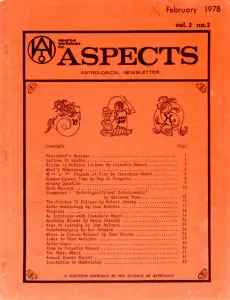
Astrology, Aquarius Workshops, Eclipses, Horary, Graphoanalysis, Ingress Charts, Planetary Aspects. This issue of Aspects Astrological Newsletter (Vol. 3, No. 2, February 1978) covers a wide range of advanced and beginner astrological techniques, organizational news, book reviews, and interviews. Highlights include discussions on Uranus and Neptune dynamics, the October 12 eclipse impact, the application of ingress charts for personal forecasting, astro-numerology, and graphoanalysis techniques correlating handwriting slant with emotional responsiveness.

Issue Highlights:
Features extensive reports on conferences, upcoming workshops by prominent astrologers like Isabel Hickey and Gina Ceaglio, presidential messages from Marion D. March, and detailed technical articles exploring natal chart interpretation, house systems, and predictive methods.

Articles:
Review of McEvers Lecture – Cornelia Hansen
Friends or Foes – Constance Mayer
Humano-Cosmic Time – Guy de Penguern
Horary Question – Anonymous
Viewpoint – Astrologer/Client Relationship – Marianne Dunn
The October 12 Eclipse – Robert Jansky
Astro-Numerology – Joan McEvers
An Interview with Constance Mayer – Marion D. March
Building Blocks – Nancy Cassidy
Keys to Learning – Joan McEvers
Graphoanalysis – Sue Johnson
Where is Cousin Melvin? – Jean Graves
Astro-Logic – Anonymous
The Phase Wheel – Anonymous
Annual Dinner Report – Karen McCauley

Discussion:
Using ingress charts for prognostications and personal forecasting
Comparing Uranus and Neptune symbolism and manifestations
Humano-Cosmic Time previewing system based on 11-minute 12-second zodiacal ticks per year of life
Turning the house method in horary and natal charts (‘Every house is a first house’)
The psychological and physiological impacts of solar and lunar eclipses across houses
Graphological analysis of writing slant and emotional styles (FA, AB, BC, CD, DE, E+)

Chart data:
Capricorn Ingress Chart (December 21, 1977)
Horary Chart for Marriage Question (July 5, 1977)

Notable contributors:
Joan McEvers (Ingress charts, astro-numerology, keys to learning)
Constance Mayer (Planetary comparison of Uranus and Neptune)
Robert Jansky (Eclipse analysis and book reviews)
Marianne Dunn (Client-astrologer relationship ethics)
Guy de Penguern (Humano-Cosmic Time system)
Sue Johnson (Graphoanalysis)
Nancy Cassidy (Beginner blocks on Leo)
Jean Graves (Derivative house systems)

Ask A Librarian

Need assistance with your research or navigating our collection? Our library team is here to help.

Please fill out the form below with details about the topics, authors, or archival materials you are looking for, and one of our librarians will review your query and respond shortly.

Help

Whether you are looking for rare historical texts or trying to locate a specific book nearby, Alexandria iBase offers two primary ways to search. Here is how to choose the right tool for what you need:

The Library Catalogue

Think of this as your global master index.

The Catalogue works just like a traditional library search system, designed to help you locate books and media across the broader astrological landscape.

  • Physical Books: Find out where physical copies of books are held in libraries, archives, or collections near you.

  • Digital Files: Access downloadable or viewable digital editions when available.

  • Best Used For: Standard research, finding specific ISBNs or authors, and tracking down physical items in the real world.

Browse Catalogue

SPECIAL COLLECTIONS

Think of this as Alexandria’s exclusive private vault.

Collections gives you direct access to Alexandria’s own curated archive of rare, proprietary, and historic astrology media.

  • Exclusive Material: Features unique texts, manuscripts, audio recordings, and visual media that are not available anywhere else.

  • Direct Access: Digitized content ready to explore straight from the platform.

  • Best Used For: Deep-dive research, discovering hidden gems, and exploring rare, one-of-a-kind astrological resources.

Browse Special Collections

Cash & In-Kind Donations

Make a one-time or recurring tax deductible cash donation.

Payment options include donating directly with us, PayPal Giving and GoFundMe.

GoFundMe for Charities and PayPal Giving are registered for tax deductions and have no required processing fees. It does offer the option to tip.

Donate

*Subject to 2.5% processing fees

Contact Us

Have a question, feedback, or a inquiry about our archives? We’d love to hear from you. Please fill out the form below with your details and message, and a member of our team will get back to you as soon as possible.

Thank you for reaching out to the Alexandria iBase Project!