
Home » Robert Hand

Robert Hand

Robert Hand is a preeminent modern astrological scholar, author, and translator whose career spans several decades of foundational contributions to the field. He is widely recognized for his scholarly approach to historical astrology, particularly his pivotal role in Project Hindsight, which sought to recover and translate ancient Hellenistic astrological texts. In addition to his extensive work in traditional and modern methodologies, Hand has authored seminal textbooks such as Planets in Transit and Planets in Youth, shaping the theoretical and practical education of generations of astrologers worldwide.

Filters

Filters


See more See less
See more See less
See more See less
See more See less
See more See less
See more See less
See more See less

Sorting

The Many Faces of Pluto (ca. 1983)

Marion D. March, Special Collections

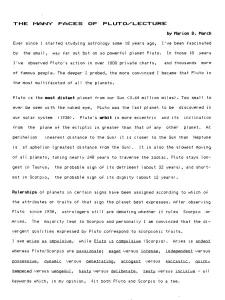
Pluto, Astrology, Mythology, Generational Planets, House Placements, Transits. This extensive lecture by Marion D. March explores the multifaceted nature of Pluto in astrology, detailing its astronomical uniqueness, diverse historical glyphs, and deep roots in Greek and Roman mythology. The text covers Pluto’s manifestations through wealth, the unseen, sexuality, power, and transformation, bridging ancient archetypes with modern psychological and mundane astrology. Special attention is given to the collective unconscious as viewed through outer planets, alongside practical examples of Pluto transits and its placement through the twelve houses and zodiac signs.

Issue Highlights:
The Many Faces of Pluto / Lecture – Marion D. March

Articles:
The Many Faces of Pluto/Lecture – Marion D. March
Mythologisches – Fritz Gehre

Discussion:
Pluto’s astronomical characteristics and orbital peculiarities
Debates on Pluto’s rulership (Scorpio vs. Aries)
Historical analysis of Pluto’s glyphs and mythological origins (Hades, Persephone, Tantalus)
Pluto’s connection to atomic energy, plutonium, and the collective unconscious
Pluto through the twelve houses and signs of the zodiac

Chart data:
Gov. Brown
H. Kissinger
George Sand
Goethe
J.P. Getty
R. Browning
C. Jung
Robert Kennedy
W. Churchill
Lee Bailey
Krishnamurti
Charles Manson
Angela Davis
Edgar Bergen
Louis Pasteur
Earl Warren
Spencer Tracy
B. Baruch
Adelle Davis
Oliver Wendell Holmes
Emerson
Ted Kennedy
Gandhi
Gershwin
Charles Lindberg
de Gaulle
Hitler
Jackie Onassis
Isabel Hickey
Nelson Rockefeller
F.D. Roosevelt
Thomas Mann
Tallulah Bankhead
Karl Marx
Richard Nixon
Sigmund Freud
Ernest Hemingway
Pablo Picasso
Lyndon Johnson
Albert Einstein
Mme. Curie
Marilyn Monroe
Patty Hearst
Muhammad Ali
Dr. Charles Mayo

Notable contributors:
Marion D. March (Author and Astrologer)
Isabel Hickey (Astrology and Symbolism)
Liz Greene (Outer Planets and Collective Unconscious)
Fritz Gehre (Mythology)
Astrology in America Today (1994)

Marion D. March, Special Collections

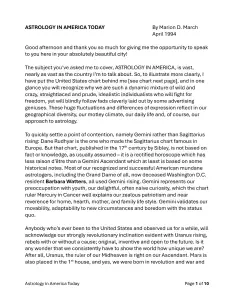
Astrology in America Today, Marion D. March, United States Chart, Gemini Ascendant, Uranian Astrology, Local Space, Project Hindsight, Lois Rodden, UAC. Marion D. March presents a comprehensive and sweeping lecture examining the state of astrology in the United States, utilizing a 7 July 1776 chart with Gemini rising and Uranus on the Ascendant as a symbolic reflection of American cultural and astrological traits. March discusses the rich eclecticism of American astrology, serving as a primary testing ground for international techniques and systems such as Midpoints, Uranian Astrology, Dr. Koch’s house systems, and composite charts from Germany, alongside Dane Rudhyar’s psychological insights from France. She details how American astrologers have championed innovations like Local Space (building on Edward Johndro, Charles Jayne, and Michael Erlewine), Heliocentric Astrology (popularized by T. Pat Davis), and Jim Lewis’s Astro*Carto*Graphy. Furthermore, she highlights the monumental work of Project Hindsight in retranslating classical texts, Lois Rodden’s monumental data collection efforts leading to the IDEA database, and the pioneering organizational frameworks of UAC (United Astrology Congress), AFAN, ISAR, and NCGR.

Issue Highlights:

Articles:
Astrology in America Today – Marion D. March

Discussion:
Debate between Gemini versus Sagittarius rising for the United States chart
The influence of computers and databases on astrological research (Lois Rodden, Edwin Steinbrecher, Michel and Françoise Gauquelin)
The professionalization of astrology and resistance to licensing
The intersection of astrology with technology, computers, and the Information Highway

Chart data:
US Chart 7 Gem ASC, July 4, 1776, 2:14 a.m. LMT, Philadelphia, PA

Notable contributors:
Marion D. March (Author / Lecturer)
Barbara Watters (Mundane astrology / Gemini rising usage)
Dane Rudhyar (Astrological philosophies and lunar phases)
Dr. Eugen Jonas (Fertility astrology)
Angel Thompson (Feng Shui and modern applications)
Michael Erlewine (Local Space mathematics and software)
T. Pat Davis (Heliocentric astrology)
Olivia Barclay, Ivy Jacobson, Joan McEvers (Horary astrology revitalization)
Jacob Schwartz (Draconic system)
Robert Hand, Robert Schmidt, Robert Zoller (Project Hindsight translation)
Jim Lewis (Astro*Carto*Graphy)
Lois Rodden (Data collection and birth data categorization)
Edwin Steinbrecher (Biographical research databases)
Neil Michelsen (Computerized ephemerides and research support)

ASPECTS Vol. 6 No. 1 Winter 1980-1 Part 1/2

ASPECTS Magazine, Special Collections

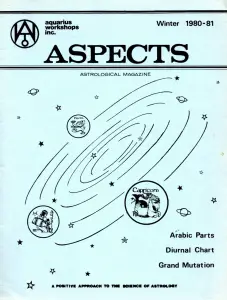
Arabic Parts, Grand Mutation, Fifth House, Sextiles. This issue of Aspects astrological magazine delivers an extensive exploration of foundational and advanced astrological techniques, featuring detailed instructional breakdowns and conference updates. Robert ‘Buz’ Myers provides a comprehensive guide on calculating and interpreting ten key Arabic Parts (including the Part of Fortune, Love, Passion, Increases, Fate, Catastrophe, Treachery, and Organization) through the twelve houses and signs. Marion D. March analyzes the monumental Great Jupiter/Saturn Conjunction and the Capricorn Ingress Chart for December 1980, discussing world consciousness shifts and the transition into the Air trigon. Additionally, Lenora M. Hill examines the Diurnal (Daily) Chart, Enrique Linarés writes on the Point of Life, Joan McEvers breaks down the symbolism of the Fifth House in her ‘Keys to Learning’ series, and Nancy Cassidy details the harmonious exchange of energy found in Sextiles.

Issue Highlights: Conference reports cover SWAC 1980, the upcoming Astrology World-Congress 1981 in Zurich, and the First Metaphysical Congress. Regular columns include Letters to the Editor, President’s Message by Roberta Fueyo, What’s Happening, Book Reviews, and Lois Rodden’s Data Column.

Articles:
How to Calculate Your Arabic Parts – Robert ‘Buz’ Myers
The Great Jupiter/Saturn Conjunction – Marion D. March
The Diurnal (Daily) Chart – Lenora M. Hill
The Point of Life – Enrique Linarés
Keys to Learning: Fifth House – Joan McEvers
Building Blocks: Sextiles – Nancy Cassidy
Capricorn Ingress – Judy Johns

Discussion:
Calculation and house interpretation of Arabic Parts
Astrological shifts during the Jupiter/Saturn conjunction in Libra
Practical applications of diurnal charts and secondary progressions
Creative and psychological significations of the Fifth House
Harmonious energy exchanges through Sextile aspects

Chart data:
Capricorn Ingress Chart (December 21, 1980, Washington, D.C.)
Sample calculation chart for Arabic Parts (October 28, 1975, Encino, CA)

Notable contributors:
Robert ‘Buz’ Myers (Arabic Parts)
Marion D. March (Great Jupiter/Saturn Conjunction)
Joan McEvers (Fifth House mechanics)
Nancy Cassidy (Sextiles)
Lenora M. Hill (Diurnal Charts)

Vesta: Keeper of the Flame (1994)

Frances McEvoy, Special Collections

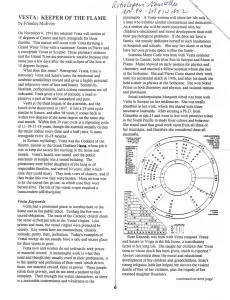
Asteroid Vesta, Grand Trine, Natal Astrological Analysis, Confinement and Solitude, Birth Data. This issue features an in-depth astrological analysis of the asteroid Vesta by Frances McEvoy, framed by Vesta’s November 1994 station at 10 degrees Cancer forming a Grand Water Trine with Saturn in Pisces and Venus in Scorpio. McEvoy explores Vesta’s 29-year cycle, its mythological roots as the Goddess of the Hearth, and its archetypal keywords such as commitment, chastity, solitude, purity, duty, perfection, and transcendent self-discipline. The article delineates how Vesta operates in both male and female charts, highlighting themes of dedicated work, privacy, and inner strength.

The study examines numerous chart examples illustrating Vesta’s impact on public service, science, art, and personal sacrifice. Detailed case studies include Marie Curie, Margaret Mead, Maria Montessori, Anne Frank, Sister Francesca Cabrini, Saint Therese of Lisieux, Queen Victoria, Grace Kelly, Jerry Brown, David Souter, Yassar Arafat, Oliver North, Angela Davis, Betty Friedan, Helen Keller, Michel Gauquelin, Bobby Fischer, and major classical composers like Bach, Mozart, Schubert, and Chopin. Themes of confinement, religious devotion, political zealotry, and intellectual immersion are thoroughly traced through Vesta’s aspects and house placements.

Additionally, Lorraine Welsh presents “The Data Base,” providing precise birth data for political candidates and public figures of the period, including Mitt Romney, Joe Malone, Paul Cellucci, and Pope John Paul II. An informational announcement for Robert Hand’s instructional classes on Traditional Western, Renaissance, and Hellenistic astrology is also included.

Issue Highlights:

Articles:
VESTA: KEEPER OF THE FLAME – Frances McEvoy
The Data Base – Lorraine Welsh

Discussion:
Vesta cycle and astronomical station patterns
Vesta in psychological, natal, and mundane astrology
Confinement, solitude, and religious devotion in chart analysis
Verified birth data for political candidates and notable figures
Instruction in Hellenistic and Renaissance traditional astrology

Chart data:
Maria Montessori
Yassar Arafat
Helen Keller
Mitt Romney
Joe Malone
Paul Cellucci
Pope John Paul II (Karol Wojtyla)

Notable contributors:
Frances McEvoy (Vesta: Keeper of the Flame)
Lorraine Welsh (The Data Base)
Robert Hand (Traditional Astrology Classes)

ASPECTS Vol. 3 No 2. Feb 1978

ASPECTS Magazine

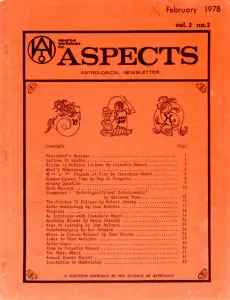
Astrology, Aquarius Workshops, Eclipses, Horary, Graphoanalysis, Ingress Charts, Planetary Aspects. This issue of Aspects Astrological Newsletter (Vol. 3, No. 2, February 1978) covers a wide range of advanced and beginner astrological techniques, organizational news, book reviews, and interviews. Highlights include discussions on Uranus and Neptune dynamics, the October 12 eclipse impact, the application of ingress charts for personal forecasting, astro-numerology, and graphoanalysis techniques correlating handwriting slant with emotional responsiveness.

Issue Highlights:
Features extensive reports on conferences, upcoming workshops by prominent astrologers like Isabel Hickey and Gina Ceaglio, presidential messages from Marion D. March, and detailed technical articles exploring natal chart interpretation, house systems, and predictive methods.

Articles:
Review of McEvers Lecture – Cornelia Hansen
Friends or Foes – Constance Mayer
Humano-Cosmic Time – Guy de Penguern
Horary Question – Anonymous
Viewpoint – Astrologer/Client Relationship – Marianne Dunn
The October 12 Eclipse – Robert Jansky
Astro-Numerology – Joan McEvers
An Interview with Constance Mayer – Marion D. March
Building Blocks – Nancy Cassidy
Keys to Learning – Joan McEvers
Graphoanalysis – Sue Johnson
Where is Cousin Melvin? – Jean Graves
Astro-Logic – Anonymous
The Phase Wheel – Anonymous
Annual Dinner Report – Karen McCauley

Discussion:
Using ingress charts for prognostications and personal forecasting
Comparing Uranus and Neptune symbolism and manifestations
Humano-Cosmic Time previewing system based on 11-minute 12-second zodiacal ticks per year of life
Turning the house method in horary and natal charts (‘Every house is a first house’)
The psychological and physiological impacts of solar and lunar eclipses across houses
Graphological analysis of writing slant and emotional styles (FA, AB, BC, CD, DE, E+)

Chart data:
Capricorn Ingress Chart (December 21, 1977)
Horary Chart for Marriage Question (July 5, 1977)

Notable contributors:
Joan McEvers (Ingress charts, astro-numerology, keys to learning)
Constance Mayer (Planetary comparison of Uranus and Neptune)
Robert Jansky (Eclipse analysis and book reviews)
Marianne Dunn (Client-astrologer relationship ethics)
Guy de Penguern (Humano-Cosmic Time system)
Sue Johnson (Graphoanalysis)
Nancy Cassidy (Beginner blocks on Leo)
Jean Graves (Derivative house systems)

Ask A Librarian

Need assistance with your research or navigating our collection? Our library team is here to help.

Please fill out the form below with details about the topics, authors, or archival materials you are looking for, and one of our librarians will review your query and respond shortly.

Help

Whether you are looking for rare historical texts or trying to locate a specific book nearby, Alexandria iBase offers two primary ways to search. Here is how to choose the right tool for what you need:

The Library Catalogue

Think of this as your global master index.

The Catalogue works just like a traditional library search system, designed to help you locate books and media across the broader astrological landscape.

  • Physical Books: Find out where physical copies of books are held in libraries, archives, or collections near you.

  • Digital Files: Access downloadable or viewable digital editions when available.

  • Best Used For: Standard research, finding specific ISBNs or authors, and tracking down physical items in the real world.

Browse Catalogue

SPECIAL COLLECTIONS

Think of this as Alexandria’s exclusive private vault.

Collections gives you direct access to Alexandria’s own curated archive of rare, proprietary, and historic astrology media.

  • Exclusive Material: Features unique texts, manuscripts, audio recordings, and visual media that are not available anywhere else.

  • Direct Access: Digitized content ready to explore straight from the platform.

  • Best Used For: Deep-dive research, discovering hidden gems, and exploring rare, one-of-a-kind astrological resources.

Browse Special Collections

Cash & In-Kind Donations

Make a one-time or recurring tax deductible cash donation.

Payment options include donating directly with us, PayPal Giving and GoFundMe.

GoFundMe for Charities and PayPal Giving are registered for tax deductions and have no required processing fees. It does offer the option to tip.

Donate

*Subject to 2.5% processing fees

Contact Us

Have a question, feedback, or a inquiry about our archives? We’d love to hear from you. Please fill out the form below with your details and message, and a member of our team will get back to you as soon as possible.

Thank you for reaching out to the Alexandria iBase Project!