

Home » Special Collections » Marion D. March

Marion D. March

The Marion D. March Collection features selected articles, original papers, and instructional lecture notes from co-founder of Aquarius Workshops and co-author of the landmark The Only Way to Learn Astrology series. Celebrated for her systematic teaching methods and practical approach, March’s work spans fundamental chart calculation, predictive techniques, synastry, and electional astrology. This archival gathering provides an invaluable look into the educational methodology and analytical insights of one of the 20th century’s premier astrological educators.

Marion D. March

Various

32 Document(s)

Various

1923-2001

Marion D March

Filters

Filters


See more See less
See more See less
See more See less
See more See less
See more See less
See more See less
See more See less

Sorting

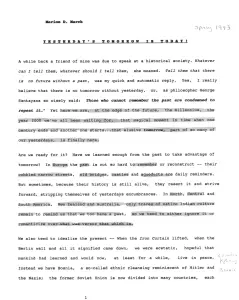
Astrology, History, Synchronicity, Evolution, and Traditional Techniques. This article serves as a reflective discourse on the evolution of astrology as the professional community approaches the turn of the millennium. Marion D. March argues that modern astrology should not entirely discard traditional wisdom in its quest to incorporate psychological insights. She highlights the necessity of balancing new, empowered approaches—which emphasize personal choice and free will—with historical techniques such as Horary and Electional astrology. March posits that true progress involves integrating the past to form the future, rather than treating ancient methods as mere fatalism.

The author discusses the shifting role of planetary archetypes, noting that as consciousness expands, our perception of planets like Saturn and Pluto evolves. She advocates for the use of Horary and Electional astrology as practical tools for empowerment, arguing that choosing an optimal moment for a venture is a demonstration of agency rather than deterministic surrender. Furthermore, she explores the broader cultural context of the 1990s, including the socio-economic impacts of technological change, the decline of rigid paradigms, and the anticipation of major outer planet transits, specifically the ingress of Uranus into Aquarius and Pluto into Sagittarius.

Issue Highlights:

Articles:
Yesterday’s Tomorrow Is Today! – Marion D. March

Discussion:
The synthesis of traditional and modern astrological techniques
The evolution of Saturn and Pluto archetypes in modern astrology
The impact of technological and societal shifts on the role of the astrologer
The philosophical divide between linear and cyclical views of time
The relevance of Electional and Horary astrology in the modern era

Chart data:
N/A

Notable contributors:
George Santayana (Philosophical context)
Carl Gustav Jung (Collective Unconscious)
Joseph Campbell (Myths and archetypes)
Steven Forest (The stigma of being an astrologer)
Christian Borup (Revival of Horary astrology)
Joan McEvers (Collaborator on Electional/Horary books)
Michel Gauquelin (Paradigm definitions)
Rob Hand (Research into old wisdom/Project Hindsight)
Those Elusive Lacks

Marion D. March, Special Collections

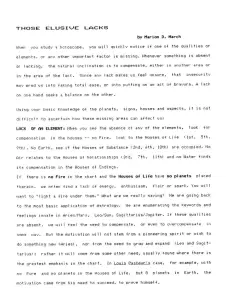
Natal Astrology, Psychological Astrology. This comprehensive article explores the phenomenon of ‘lacks’ or deficiencies in a birth chart, specifically focusing on missing elements (Fire, Earth, Air, Water), missing qualities (Cardinal, Fixed, Mutable), missing house emphases, unaspected planets, and missing aspect types. March provides a profound psychological framework where deficiencies often result in compensatory or overcompensatory behaviors, leading individuals to either struggle with or excel in those specific areas based on other configurations in their chart.

The text is heavily illustrated with examples of public figures, ranging from celebrities and politicians to historical figures and criminals, to demonstrate how a lack manifests in real life. March explains that when an element or quality is missing, the individual’s motivation often shifts to other emphasized areas of the chart, creating a dynamic of ‘faking’ or overcompensating for the perceived deficit. For example, a lack of Fire might lead to a lack of energy or enthusiasm, but an individual with such a deficiency might push themselves into the spotlight to prove their value to others.

The final sections discuss technical nuances, such as unaspected planets and specific aspect deficiencies like the lack of oppositions or squares. The author emphasizes that while these ‘lacks’ present challenges, they are rarely insurmountable; rather, they demand a different approach to internal integration and growth. A skilled astrologer, per the author, can guide clients to recognize these patterns and find healthy ways to balance their charts, thereby preventing the negative internalization or avoidance behaviors often associated with these deficiencies.

Issue Highlights:

Articles:
Those Elusive Lacks – Marion D. March

Discussion:
Compensatory mechanisms for missing elements in a chart
Psychological impacts of missing qualities (Cardinal, Fixed, Mutable)
The influence of unaspected planets on personality integration
Difficulty of life challenges for charts lacking squares or oppositions

Chart data:
Louis Pasteur, Jack Benny, Merle Oberon, Vincent Price, Hubert H. Humphrey, Fanny Brice, Zelda Fitzgerald, James Huberty, Mark Twain, Maurice Udall, Claus von Bulow, Christiaan Barnard, J. Paul Getty, Vincent van Gogh, Geraldine Ferraro, Judith Krantz, Edgar Cayce, Marlon Brando, Dustin Hoffman, Jack Nicholson, Helen Keller, Napoleon Bonaparte, Jeffrey MacDonald, Marlene Dietrich, Muhammed Ali, George Foreman, Joe Frazier, Placido Domingo, Henri Toulouse Lautrec, Ludwig van Beethoven, Bruno Hauptmann, George Braque, Barbra Streisand, Elizabeth Barrett Browning, Errol Flynn, Arturo Toscanini, Corazon Aquino, Prince Philip, Jim Jones, Bruce Springsteen, Timothy Leary, Jesse Jackson, John Belushi, Sam Goldwyn, Gary Hart, Desi Arnaz, Orson Welles, Princess Diana, Barbara Hutton, T.E. Lawrence, Linus Pauling, Prince Charles, Robyn Smith, Queen Elizabeth II, Mia Farrow, Ava Gardner, Rajiv Gandhi, Vida Blue, Vaslav Nijinsky, Maria Montessori, Mahatma Gandhi, Anwar Sadat, Art Buchwald, Jean Claude Killy, Mickey Rooney, Sammy Davis Jr., Nancy Reagan, Roald Amundsen, Rock Hudson, Robert Oppenheimer, Lena Horne, Richard Loeb, Ogden Nash, Ted Kennedy, Sally Ride, James Pike, Marvin Mitchelson, Frank Sinatra, John F. Kennedy, Nelson Rockefeller, Clint Eastwood, Ignace Paderewski, Emily Dickinson, Simone de Beauvoir, Sandra O’Connor, Keenan Wynn, Anne Morrow Lindbergh, Gertrude Stein, Beatrix of the Netherlands, John Dean, Enrico Caruso, Maurice Chevalier, Alfred Hitchcock, Stacey Keach, Princess Anne, Prince Charles, Benito Mussolini, David Bowie, Madonna, Charles Manson, Josef Goebbels, Tyrone Power, Montgomery Clift, Scott Fitzgerald, Noel Coward, Margaret Sullavan, Leslie Howard, Charles Lindbergh.

Notable contributors:
Marion D. March (Psychological interpretations of natal chart deficiencies)

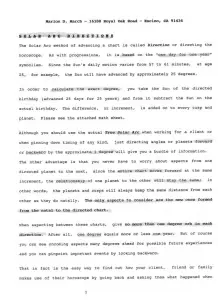
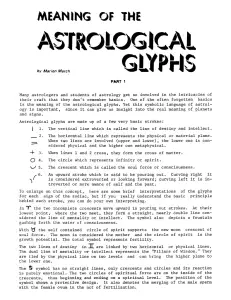
Astrological Glyphs, Esoteric Symbolism, Zodiac Signs, Planetary Glyphs, Yoga Paths. This document provides a detailed esoteric breakdown of astrological glyphs for both the signs of the zodiac and the planets, written by Marion March. The text examines the fundamental strokes used to construct astrological symbols—such as vertical lines (destiny and intellect), horizontal lines (physical/material planes), crosses of matter, circles of spirit, crescents of soul force, and pouring-out strokes. Part 1 explores individual zodiac signs from Aries to Pisces, breaking down how their specific visual geometry reflects psychological, emotional, and evolutionary principles. Part 2 extends this symbolic analysis to the planets (Sun, Moon, Mercury, Venus, Mars, Jupiter, Saturn, Uranus, Neptune, and Pluto), explaining how spirit, soul, and matter interact within each glyph. The author concludes by synthesizing these concepts with practical chart delineation, using Mercury placed in Gemini versus Cancer as an example, and correlating them with the paths of Jnana Yoga and Bhakti Yoga from the Vedas.

Issue Highlights:

Articles:
Meaning of the Astrological Glyphs (Part 1) – Marion March
Meaning of the Astrological Glyphs (Part 2) – Marion March

Discussion:
Basic strokes of astrological glyphs
Zodiac sign glyph interpretations (Aries through Pisces)
Planetary glyph interpretations (Sun through Pluto)
Applying glyph symbolism to chart delineation
Connecting astrological placements to the paths of Yoga (Jnana and Bhakti)

Chart data:
Mercury in Gemini
Mercury in Cancer

Notable contributors:
Marion March (Author)

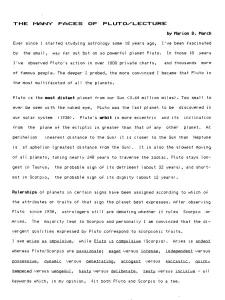
The Many Faces of Pluto (ca. 1983)

Marion D. March, Special Collections

Pluto, Astrology, Mythology, Generational Planets, House Placements, Transits. This extensive lecture by Marion D. March explores the multifaceted nature of Pluto in astrology, detailing its astronomical uniqueness, diverse historical glyphs, and deep roots in Greek and Roman mythology. The text covers Pluto’s manifestations through wealth, the unseen, sexuality, power, and transformation, bridging ancient archetypes with modern psychological and mundane astrology. Special attention is given to the collective unconscious as viewed through outer planets, alongside practical examples of Pluto transits and its placement through the twelve houses and zodiac signs.

Issue Highlights:
The Many Faces of Pluto / Lecture – Marion D. March

Articles:
The Many Faces of Pluto/Lecture – Marion D. March
Mythologisches – Fritz Gehre

Discussion:
Pluto’s astronomical characteristics and orbital peculiarities
Debates on Pluto’s rulership (Scorpio vs. Aries)
Historical analysis of Pluto’s glyphs and mythological origins (Hades, Persephone, Tantalus)
Pluto’s connection to atomic energy, plutonium, and the collective unconscious
Pluto through the twelve houses and signs of the zodiac

Chart data:
Gov. Brown
H. Kissinger
George Sand
Goethe
J.P. Getty
R. Browning
C. Jung
Robert Kennedy
W. Churchill
Lee Bailey
Krishnamurti
Charles Manson
Angela Davis
Edgar Bergen
Louis Pasteur
Earl Warren
Spencer Tracy
B. Baruch
Adelle Davis
Oliver Wendell Holmes
Emerson
Ted Kennedy
Gandhi
Gershwin
Charles Lindberg
de Gaulle
Hitler
Jackie Onassis
Isabel Hickey
Nelson Rockefeller
F.D. Roosevelt
Thomas Mann
Tallulah Bankhead
Karl Marx
Richard Nixon
Sigmund Freud
Ernest Hemingway
Pablo Picasso
Lyndon Johnson
Albert Einstein
Mme. Curie
Marilyn Monroe
Patty Hearst
Muhammad Ali
Dr. Charles Mayo

Notable contributors:
Marion D. March (Author and Astrologer)
Isabel Hickey (Astrology and Symbolism)
Liz Greene (Outer Planets and Collective Unconscious)
Fritz Gehre (Mythology)

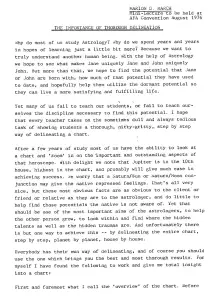
Astrological Delineation, Chart Synthesis, Progressions, Transits, House Rulerships, Decanates, Free Will. This document provides a comprehensive, step-by-step lecture by Marion D. March on the art and discipline of thorough astrological chart delineation. March emphasizes looking beyond obvious isolated placements (like Jupiter in the 10th house or Saturn-Sun conjunctions) to uncover hidden talents, potentials, and traumas through systematic chart analysis. She outlines an initial ‘overview’ examining element/quality distribution, chart patterns (bundle, bucket, locomotive), and configurations (grand crosses, T-squares, yods). Following the overview, she details dissecting the chart starting with the ‘heart of the chart’ (the Sun by sign, house, ruler, decanate, and aspects), followed by the Moon for emotional personality, the Ascendant for outer personality, and proceeding planet-by-planet and house-by-house.

Issue Highlights:
The text further explores the synthesis of recurring traits, handling human contradictions, and integrating progressions and transits. March shares her personal technique of placing three rings around a chart: natal, secondary progressions alongside solar arcs, and slow-moving transits in the outer ring. She stresses that progressions reflect changes in inner attitude and psychological shifts, whereas transits indicate tangible outer events. Crucial astrological maxims are highlighted, notably ‘The stars impel, they do not compel’ and ‘All important events are backed by aspects, but not every aspect will bring an important event,’ reinforcing the primacy of client free will and counseling caution in rigid prediction.

Articles:
The Importance of Thorough Delineation – Marion D. March

Discussion:
Step-by-step chart delineation methodology
Utilizing the ‘overview’ for chart synthesis
Analyzing the Sun, Moon, and Ascendant
House rulers and house-to-house connections
Secondary progressions and Solar Arc directions
The interplay between transits, inner attitudes, and free will

Chart data:
Sun at 12 Gemini in the 6th house, ruled by Mercury in Cancer in the 7th house

Notable contributors:
Marion D. March (Author and Lecturer)

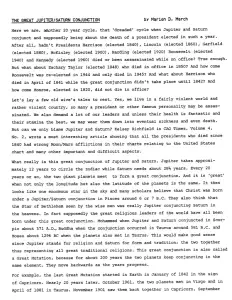
Mundane Astrology, Jupiter-Saturn Conjunctions, Great Mutation. This article provides a comprehensive exploration of the 20-year cycle of Jupiter/Saturn conjunctions, often referred to as a “Great Mutation.” The author discusses the historical folklore regarding the deaths of U.S. presidents elected in conjunction years, debunking it by referencing more complex astrological factors like Moon/Mars afflictions and difficult aspects in national charts. The text details the transition from Earth-sign to Air-sign cycles, specifically the movement into Libra in 1980-1981 and eventually Aquarius in 2020, forecasting a shift toward intellectual, social, and humanitarian themes.

The synthesis includes a deep dive into the 1980-1981 triple conjunction occurring in Libra. The author utilizes the Astro*Carto*Graphy method, invented by Jim Lewis, to analyze the impact of these planetary alignments on global nations, focusing on angularity and planetary aspects to the charts of independent nations and their leaders. The text highlights how specific countries, including the U.S., France, the USSR, and Turkey, have the conjunction on their angles, suggesting heightened influence or unpredictability for those regions.

Issue Highlights:

Articles:
The Great Jupiter/Saturn Conjunction – Marion D. March
Astro*Carto*Graphy – Jim Lewis

Discussion:
Mundane astrological forecasting
The impact of Great Mutation cycles on global politics and economics
Utilizing national constitutions for birth charts
Geopolitical analysis using Astro*Carto*Graphy

Chart data:
United States
USSR
France
Turkey
Various national charts based on constitutional dates

Notable contributors:
Marion D. March (Author/Astrological analysis)
Jim Lewis (Astro*Carto*Graphy technique developer)
Johanna Koch (Data collection)
Bette Travis (Data collection)
Angel Thompson (Data collection)

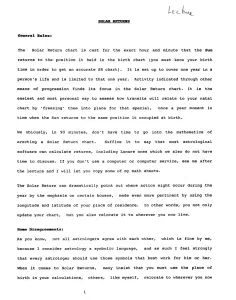
Solar Returns, Astrological Techniques, Chart Interpretation. This document serves as a comprehensive instructional guide on the practice of Solar Return (SR) astrology. It covers the fundamental methodology of casting an SR chart for the exact time the Sun returns to its natal position, with a specific focus on the technique of relocating the chart to the individual’s current place of residence. The author emphasizes that the Solar Return chart is not an isolated tool but must be interpreted in conjunction with the natal chart, progressions, and transits, functioning as a yearly focus within the broader context of a person’s life.

The text provides detailed frameworks for interpretation, including the significance of the SR Ascendant, the house placement of the Sun, and the importance of natal houses falling on the SR Ascendant. It discusses the use of planetary axes, the importance of angular planets, and the role of specific aspects. Furthermore, the document offers extensive lists of astrological indicators for major life events, including marriage, childbirth, profession/career change, home moves, and divorce, by identifying which houses must be activated or stressed to signify these developments.

Issue Highlights:

Articles:
Solar Returns (General Rules) 
Signs Rising on the Solar Return Ascendant 
Houses of the Solar Return Chart
Rising Planets in the Solar Return Chart
Solar Return Notes & Odds and Ends

Discussion:
Methodology for relocating charts to current residence.
Interpretation of natal houses falling into the SR Ascendant.
Significance of planets rising behind the SR Ascendant.
Impact of planetary configurations and house activations on life events (marriage, career, etc.).

Chart data:
General reference charts (None specified as personal examples).

Notable contributors:
Marion D. March (Solar Return Astrology)

Solar Arc Directions

Marion D. March, Special Collections

Solar Arcs, Secondary Progressions, Transits, Astrology Cycles, Predictive Techniques. This document provides a comprehensive instructional overview of major predictive astrological techniques, focusing on Solar Arc Directions, secondary progressions, and planetary transits. Marion D. March emphasizes the practical application of these methods, urging students to avoid rigid adherence to a single system and instead utilize a combination of techniques, including Solar Returns, to gain a nuanced understanding of a client’s experiences. The text underscores that while these methods provide insights into life rhythms, individual free will remains the ultimate governing factor in how these energies are expressed.

The manual details the mechanics of Solar Arc Directions—the “one day for one year” symbolism—and provides step-by-step mathematical instructions for calculating arcs. A significant portion of the guide is dedicated to case study analysis of Kitty Kelley, tracking her life events (career, marriage, writing) through transits and directed aspects of slow-moving planets like Jupiter, Saturn, Uranus, Neptune, and Pluto. The author differentiates the influence of these planets, noting that personal planets govern daily moods and minor events, while transcendental planets mark long-term periods of transformation, such as the midlife crisis associated with Uranus, or the intense, deliberate shifts indicated by Pluto transits.

Furthermore, the document explores the cyclical nature of planetary movement through the four quadrants of the horoscope, defining them by key psychological phases: Learn (Ascendant to IC), Experience (IC to Descendant), Act (Descendant to MC), and Gather Rewards (MC to Ascendant). It highlights the importance of T-squares, yods, and grand crosses in natal configurations, noting how these are activated by directed or transiting planets. The text concludes by reinforcing the need for practitioners to remain grounded in common sense, prioritizing logic and awareness over fatalistic predictions.

Issue Highlights:

Articles:
Solar Arc Directions – Marion D. March
Transits – Marion D. March
Cycles – Marion D. March
Planetary Speeds and Cycles – Marion D. March
Math Instructions for Solar Arc Directions – Marion D. March

Discussion:
The use of Solar Arcs vs. Secondary Progressions and Transits
The influence of planetary speeds on life events
Interpreting natal T-squares and yods under transit activation
The psychological significance of the four astrological quadrants
Methodological differences between natal, progressed, and directed charts

Chart data:
Kitty Kelley (Born April 4, 1942, 5:00 pm PDT, Spokane, WA)

Notable contributors:
Marion D. March (Astrological education, techniques, and predictive theory)

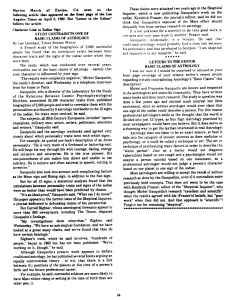
Astrological Research, Statistical Analysis, Skepticism, and Professional Practice. This document presents a debate between the scientific community and the astrological community regarding the validity of Sun Sign astrology. It centers on a study by Michel Gauquelin, who statistically analyzed biographies of 2,000 successful individuals to determine if personality traits correlated with their Sun signs. The study concluded that such correlations were non-existent, a finding that appeared in the Skeptical Inquirer.

The synthesis highlights the friction between the reductionist approach of Sun sign pop-astrology and the holistic, interpretive nature of professional astrological practice. While Gauquelin’s research challenged the claims of popular astrology, it is noted that serious astrologers generally do not define a person by a single sign, viewing it instead as an art or technique requiring synthesis of various planetary factors—similar to medical or psychological diagnostics. The text also touches upon Gauquelin’s controversial ‘Mars effect’ theory, which posits a link between planetary positions at birth and professional outcomes.

Issue Highlights:

Articles:
Study Contradicts One of Basic Claims of Astrology – Lee Dembart
Letters to the Editor: Basic Claims of Astrology – Anonymous (submitted by Marion March)

Discussion:
Scientific skepticism vs. astrological theory
The limitations of Sun sign astrology
Statistical analysis of birth charts and biographies
Professional astrology as an art or synthesis of multiple factors

Chart data:
Michel Gauquelin (Scorpio)
Carroll Righter (Astrologer)

Notable contributors:
Michel Gauquelin (Statistical Research)
Carroll Righter (Astrological Foundation research)
Kendrick Frazier (Editor, Skeptical Inquirer)
Marion March (Contributor/Letter provider)

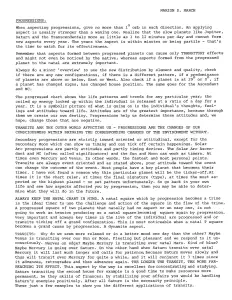
Secondary Progressions, Transits, and Predictive Timing. This document provides a foundational guide on the distinct roles and technical applications of secondary progressions and transits in astrology. Marion D. March emphasizes that secondary progressions are primarily inward-oriented indicators of psychological patterns and attitudinal shifts, utilizing the symbolic ‘day for a year’ ratio. She advises practitioners to conduct a comprehensive overview of the progressed chart, checking for shifts in elements, qualities, planetary houses, signs, and angular configurations to gauge the evolving trends of an individual’s year.

In contrast to the attitudinal nature of progressions, transits are described as event-oriented external influences. The text clarifies that while progressions signify internal changes of consciousness, transits represent the outer world affecting the individual. A significant portion of the instruction focuses on the relationship between natal potential and dynamic movement, particularly stressing that the natal chart remains the anchor for all interpretations. The author highlights the potency of transits and progressions when they ‘trigger’ natal configurations, such as a natal T-square evolving into a grand cross.

Furthermore, the text offers practical guidance on technical nuances, such as applying a strict one-degree orb for progressions, the importance of partile aspects, and the varying durations of transits based on the velocity of the planets. It specifically contrasts the fleeting, often unconscious effects of rapid transits (like Venus or Mercury) against the long-lasting, formative impact of slower-moving outer planets like Saturn. By integrating these two predictive methodologies, the author argues that one can better understand both the timing of life events and the internal psychological responses to them.

Issue Highlights:

Articles:
Progressions – Marion D. March
Transits – Marion D. March

Discussion:
Differentiating between internal (progression) and external (transit) influences
The symbolic ‘day-for-a-year’ ratio
Timing events using secondary progressions vs. Solar Arc
The importance of natal chart configuration triggers
Saturn transits and the necessity principle

Chart data:
Not applicable

Notable contributors:
Marion D. March (Astrological technique and methodology)

Ask A Librarian

Need assistance with your research or navigating our collection? Our library team is here to help.

Please fill out the form below with details about the topics, authors, or archival materials you are looking for, and one of our librarians will review your query and respond shortly.

Help

Whether you are looking for rare historical texts or trying to locate a specific book nearby, Alexandria iBase offers two primary ways to search. Here is how to choose the right tool for what you need:

The Library Catalogue

Think of this as your global master index.

The Catalogue works just like a traditional library search system, designed to help you locate books and media across the broader astrological landscape.

  • Physical Books: Find out where physical copies of books are held in libraries, archives, or collections near you.

  • Digital Files: Access downloadable or viewable digital editions when available.

  • Best Used For: Standard research, finding specific ISBNs or authors, and tracking down physical items in the real world.

Browse Catalogue

SPECIAL COLLECTIONS

Think of this as Alexandria’s exclusive private vault.

Collections gives you direct access to Alexandria’s own curated archive of rare, proprietary, and historic astrology media.

  • Exclusive Material: Features unique texts, manuscripts, audio recordings, and visual media that are not available anywhere else.

  • Direct Access: Digitized content ready to explore straight from the platform.

  • Best Used For: Deep-dive research, discovering hidden gems, and exploring rare, one-of-a-kind astrological resources.

Browse Special Collections

Cash & In-Kind Donations

Make a one-time or recurring tax deductible cash donation.

Payment options include donating directly with us, PayPal Giving and GoFundMe.

GoFundMe for Charities and PayPal Giving are registered for tax deductions and have no required processing fees. It does offer the option to tip.

Donate

*Subject to 2.5% processing fees

Contact Us

Have a question, feedback, or a inquiry about our archives? We’d love to hear from you. Please fill out the form below with your details and message, and a member of our team will get back to you as soon as possible.

Thank you for reaching out to the Alexandria iBase Project!