
Home » Traditional Astrology

Traditional Astrology

A modern umbrella category encompassing pre-modern Western systems (Hellenistic, Arabic/Persian, Medieval, and Renaissance). It is characterized methodologically by reliance on essential and accidental dignities, planetary sect, traditional rulerships, whole sign or quadrant houses, and concrete, observable outcomes rather than psychological internalizations.

Filters

Filters


See more See less
See more See less
See more See less
See more See less
See more See less
See more See less
See more See less

Sorting

Mundane Astrology, Medical Astrology, and Predictive Astrology. This archival document is the 87th edition of Mercury Hour (January 1996), an astrological community journal edited and published by Edith Custer. The issue features articles, research notes, chart rectifications, software developments, and correspondence among practicing astrologers, including Bil Tierney’s psychological examination of Jupiter, Ed Dearborn’s technical breakdown of the “Translation of Light”, Valerie Vaughan’s defense of predictive astrology, Byron Ross Wahl’s analysis of the Solar Apex Synthetic Method (SASM), and the final installment of Robert “Buz” Myers’ lecture series on Moon-Saturn dynamics. Additionally, the journal covers mundane and political analyses of the O.J. Simpson verdict by John Kalus and Marion March, national chart rectifications for Washington, D.C. by Marc Penfield, insights on Uranus entering Aquarius by Kaye Shinker, medical and genetic commentary by T. Patrick Davis, software updates by Mark Pottenger, and tributes to astrologer Al H. Morrison.

Issue Highlights

Book Reviews
By Edith Custer:
Llewellyn’s 1996 Astrological Pocket Planner
Llewellyn’s Astrological Calendar 1996
Astrology Really Works by The Magi Society – Marc Penfield

Articles
A Look at Jupiter’s Shortcomings – Bil Tierney
Translation of Light – Ed Dearborn
Group Dynamics – Mary K. Creasey
Been There, Done That – Kaye Shinker
[O.J. Simpson verdict] – John Kalus
SASM, Columbus, and Samana Cay – Byron Ross Wahl
1995 Oven Saga – Roberta Strain
Moon/Saturn, Parts 7 and 8 of 8 – Robert “Buz” Myers
Winter Solstice 1995 – Dot Willis
The Art of Self-Defense: Lesson, Fighting at the Level of Your Opponent,
Part 1 of 2 – Valerie Vaughn
Al H. Morrison: Rectification, Poison Data, Genetics – T. Patrick Davis
[obituary & excerpts]
Discussions
Solar returns
O, J, Simpson trial
Chart data
(some incomplete or in question)
Powell, Colin
Washington, D.C.
Notable contributors
Donna Van Toen (various topics)
Mark Pottenger (Progressed MC techniques in software)
Marc Penfield (Chart of the U.S.A.)
Lee Lehman (corrections to Essential Dignities)
Marion March (O. J. Simpson trial, Chaos Theory, Solar Returns)
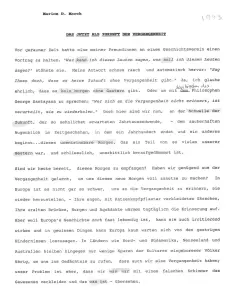
Marion D. March, Electional Astrology, Horary Astrology, Future of Astrology, Turning to the Past for Future Wisdom. In this thoughtful essay, prominent astrologer Marion D. March reflects on the transition from the 20th century into the new millennium, examining how astrologers must reclaim traditional techniques while embracing modern psychological insights. She discusses the danger of throwing out the past in pursuit of entirely modern psychological or New Age frameworks, advocating instead for a synthesis of ancient practices such as electional astrology (Zeitwahlhoroskop) and horary astrology with contemporary astrological counseling. March draws on historical milestones, societal changes in Europe and globally, and the outer planets (Uranus, Neptune, and Pluto) to chart a course for the evolution of astrology in the 21st century.

March elaborates on her personal transition toward electional astrology, noting how utilizing electional charts for film production schedules yielded tangible success and two Academy Awards for a client. She critiques the historical rejection of traditional methods and urges practitioners to overcome the stigma of fatalism. Furthermore, she explores mundane shifts, such as upcoming ingresses of Uranus and Neptune into Aquarius and Pluto into Sagittarius, linking them to cultural transformations, the re-emergence of ancient modalities like Feng-Shui and the I-Ching, and the ongoing dialogue between science, religion, and astrology.

Issue Highlights:

Articles:
Das Jetzt als Zukunft der Vergangenheit – Marion D. March

Discussion:
Integrating traditional electional and horary techniques with modern psychological astrology
The evolution of outer planet symbolism (Saturn, Uranus, Neptune, Pluto) and their sign ingresses
Overcoming public and religious skepticism towards astrology
Reclaiming ancient wisdom and cultural heritage (Feng-Shui, I-Ching) for the 21st century

Chart data:
N/A

Notable contributors:
Marion D. March (Author and Astrologer)
Christian Borup (Electional and Horary Astrology)
Steven Forrest (Discussion of astrological public reception)

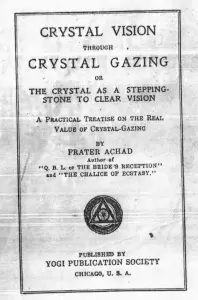
Crystal Gazing, Scrying, Thelemic Magick, Ritual Practice, Inner Vision. This practical treatise titled “Crystal Vision Through Crystal Gazing or The Crystal as a Stepping-Stone to Clear Vision” by Frater Achad (C. Stansfeld-Jones) provides a comprehensive guide to the occult, ceremonial, and psychological methods of scrying using crystal spheres and magical instruments. The author outlines the preparation, purification, consecration, and initiation of both the scryer and the crystal (referred to through chapters on the Lesser, Greater, and Universal Crystalline Spheres). Drawing on historical practices such as those of Dr. John Dee and Sir Edward Kelley, Trithemius of Spanheim, and Francis Barrett, the text details the construction of magical circles, tables of practice, planetary hours, elemental and planetary rulers, and angelic invocations. Furthermore, it incorporates profound teachings from the Golden Dawn tradition, Thelema, the Holy Qabalah, and the Tarot, emphasizing the transition from physical scrying to true inner vision, astral travel in the Body of Light, and the attainment of union with the Higher Self and Star Consciousness.

Issue Highlights:

Articles:
Foreword – Frater Achad
Chapter I: The Lesser Crystalline Sphere – Frater Achad
Chapter II: The Greater Crystalline Sphere – Frater Achad
Chapter III: The Universal Crystalline Sphere – Frater Achad
Chapter IV: A Consideration of the Ancient Methods – Frater Achad
Chapter V: Further Considerations—The Methods of Dr. Dee and Sir Edward Kelly – Frater Achad
Chapter VI: The Attainment of Crystal Vision – Frater Achad
Chapter VII: Of the Ultimate Crystal – Frater Achad

Discussion:
Methods of purifying and consecrating a crystal sphere
Planetary hours and angelic rulers in ritual practice
The distinction between astral visions and true spiritual illumination
Travel in the Body of Light and its application to scrying
The use of magical weapons, pentacles, and divine names

Chart data:
Tables of Planetary Hours and Rulers for Days and Nights
Magical Instruments and Tables of Angels (Michael, Gabriel, Samael, Sachiel, Anael, Cassiel, Raphael)

Notable contributors:
Frater Achad (Author)
John Melville (Author of Crystal Gazing and Clairvoyance)
Dr. John Dee (Seer and Magician)
Sir Edward Kelly (Scryer and Medium)
Trithemius of Spanheim (Historical occultist and instructor)
Francis Barrett (Translator and compiler of magical instructions)

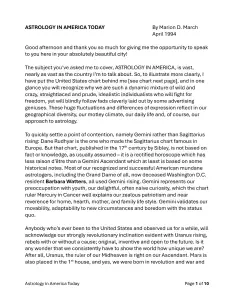
Astrology in America Today (1994)

Marion D. March, Special Collections

Astrology in America Today, Marion D. March, United States Chart, Gemini Ascendant, Uranian Astrology, Local Space, Project Hindsight, Lois Rodden, UAC. Marion D. March presents a comprehensive and sweeping lecture examining the state of astrology in the United States, utilizing a 7 July 1776 chart with Gemini rising and Uranus on the Ascendant as a symbolic reflection of American cultural and astrological traits. March discusses the rich eclecticism of American astrology, serving as a primary testing ground for international techniques and systems such as Midpoints, Uranian Astrology, Dr. Koch’s house systems, and composite charts from Germany, alongside Dane Rudhyar’s psychological insights from France. She details how American astrologers have championed innovations like Local Space (building on Edward Johndro, Charles Jayne, and Michael Erlewine), Heliocentric Astrology (popularized by T. Pat Davis), and Jim Lewis’s Astro*Carto*Graphy. Furthermore, she highlights the monumental work of Project Hindsight in retranslating classical texts, Lois Rodden’s monumental data collection efforts leading to the IDEA database, and the pioneering organizational frameworks of UAC (United Astrology Congress), AFAN, ISAR, and NCGR.

Issue Highlights:

Articles:
Astrology in America Today – Marion D. March

Discussion:
Debate between Gemini versus Sagittarius rising for the United States chart
The influence of computers and databases on astrological research (Lois Rodden, Edwin Steinbrecher, Michel and Françoise Gauquelin)
The professionalization of astrology and resistance to licensing
The intersection of astrology with technology, computers, and the Information Highway

Chart data:
US Chart 7 Gem ASC, July 4, 1776, 2:14 a.m. LMT, Philadelphia, PA

Notable contributors:
Marion D. March (Author / Lecturer)
Barbara Watters (Mundane astrology / Gemini rising usage)
Dane Rudhyar (Astrological philosophies and lunar phases)
Dr. Eugen Jonas (Fertility astrology)
Angel Thompson (Feng Shui and modern applications)
Michael Erlewine (Local Space mathematics and software)
T. Pat Davis (Heliocentric astrology)
Olivia Barclay, Ivy Jacobson, Joan McEvers (Horary astrology revitalization)
Jacob Schwartz (Draconic system)
Robert Hand, Robert Schmidt, Robert Zoller (Project Hindsight translation)
Jim Lewis (Astro*Carto*Graphy)
Lois Rodden (Data collection and birth data categorization)
Edwin Steinbrecher (Biographical research databases)
Neil Michelsen (Computerized ephemerides and research support)

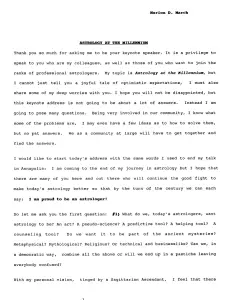
Professionalism, Astrological Standards, Millennium, Cultural Integration. Marion D. March delivers a passionate and challenging keynote address focusing on the state of astrology as the 20th century draws to a close. She raises eleven critical questions regarding the identity, reputation, standards, and future of astrology in a rapidly changing world. March examines external criticisms from scientists like Richard Dawkins, legal and financial controversies, the need for standardized training and testing akin to acupuncture and psychology, and the internal politics of major astrological organizations such as AFA, AFAN, ISAR, and NCGR. She highlights positive milestones including UAC faculty compensation, improved literature, computer advancements, financial research by Arch Crawford and Ray Merriman, the Gauquelins’ statistical research, Project Hindsight, and the unifying power of the Internet.

Issue Highlights:
A keynote address exploring the evolution of astrology, the necessity of professional standards, overcoming poverty consciousness among astrologers, and navigating technological and societal seachanges toward the new millennium.

Articles:
Astrology at the Millennium – Marion D. March

Discussion:
What do astrologers want astrology to be (art, science, predictive tool, helping tool)?
Public perception and attacks from the scientific community.
The need for testing, licensing, and standardized education.
Internal politics and division among astrological organizations.
The validity of astrology and empirical vs. judicial approaches.
The impact of computers, the Internet, and Project Hindsight.
Astrologers’ poverty consciousness and professional compensation.
Cyclical time vs. linear time and the philosophical implications of the upcoming millennium.

Chart data:
N/A

Notable contributors:
Marion D. March (Keynote Speaker)
Nick Campion (Natural vs. Judicial Astrology)
Joan McEvers (Astrology as a tool)
Arch Crawford (Financial Astrology)
Ray Merriman (Financial Astrology)

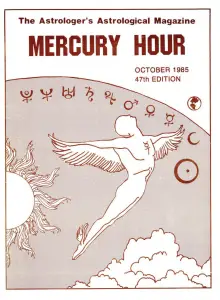
Astrological Techniques, Astrology History, and Mundane Astrology. This archival item is the October 1985 issue (47th Edition) of Mercury Hour, a quarterly magazine edited by Edith Custer and Jewell Fahey in Lynchburg, Virginia. Key contents include technical articles such as John F. Gay, III’s guide to calculating house cusps and astronomical coordinates using scientific calculators, Joan McEvers’s second installment on interpreting Lunar Returns, and Dorothy Willis’s foundational rules for astro-meteorology. Mundane and historical pieces feature Marc Penfield’s chart rectifications for Russia’s 1917 Bolshevik Revolution and the “Chart Mart” data collection, Fran Rosen’s explorations of the Kabbalistic Tree of Life and Tarot symbolism, and Gilbert Navarro’s definition of horary astrology. Additional contributions include reviews by Marion March, reports on the 7 Hills Astrological Conference, an analysis of the 1985 Bradford football stadium fire by Olivia Barclay, and reader discussions surrounding topics such as ethics, licensing, house systems, and birth data for figures like Ronald Reagan, Mikhail Gorbachev, and Mary Baker Eddy.


Issue Highlights


Book Reviews

By Marion March:

Celestial Psychology: An Astrological Guide to Growth and Transformation by Doris A. Hebel

Astrochemistry: A Study of Metal-Planet Affinities by Nick Kellerstrom

Instant Astrology by Mary Orser, Rick and Glory Brightfield

The Astrology of Deep Space by Philip Sedgwick

Spiritual Astrology: A Layperson’s Guide to Self-Unfoldment by Jan Spiller

The Practice and Profession of Astrology by Stephen Arroyo

Birth Pattern Psychology by Tamise Van Pelt

The Astrological Prayer Book by Alda Marian Jangl
Your Key to Astrology [book plus] Astrological Key Cards: Planets, Signs, Houses, Aspects by Bill Hansen – Edith Custer


Articles

Astrology and the Weather – Dorothy Willis

Lunar Return Notes, Part II – Joan McEvers

Calculation Without Tables of the Julian Day & Century, Obliquity of the Ecliptic, MC, ASC, and Houses, Part I – John F. Gay, III

The Tree of Life: An Overview – Fran Rosen

Astrological Hall of Fame Awards – Fraternity for Canadian Astrologers [2nd National Conference]

Along the Tarot Path – Fran Rosen

How I Survived my Pluto Square Pluto and Other Transits – Carol Hemingway

The Luscher Color Test, A Symbolic Testing Model – Zan Key

Observations on Astrology, Original & Borrowed – John F. Gay, III

I’m Mad at You!!!! – Mary Ellen Glass

The Horoscope of Russia – Marc Penfield

Chart Mart – Marc Penfield

A Trip Round the Hawaiian Zodiac, Part II – Cheryl Niggle

Astrology and the Weather: Forecasting the Weather, Part I – Dorothy Willis

Horary Astrology: A Definition – Gilbert Navarro

The Business Cycle, Part II – Bill Hansen

Neptune, The Collective Fantasy, and Popular Music – Amy Franco

The Mystery of the Chinese Zodiac, Now Revealed for the First Time – Frank Hampton

The Qualities of Time, Part I – Tundra Wind


Discussions

Astrology, licensure, & ethics

Quadrant house systems vs. Equal Houses

Radix-based Tarot technique

Natal location in Return chart

Birth time of Ronald Reagan

Seven Hill Astrological Conference [reports]

Mercury retrograde


Chart data

Anderson, Loni
Benetar, Haley (daughter of Pat Benetar)
Bowie, David
Eddy, Mary Baker
Eisenhower, Melanie (daughter of Julie Nixon and David Eisenhower)
Gorbachev, Mikhail
Jagger, Elizabeth (daughter of Mick Jagger and Jerri Hall)
Kennedy III Robert F.
Morgan, Vicki
Neves, Tancredo
Pace, Canio and Thomas (cross-year twins)
Reagan, Ronald
Schwab, Loluis and Leona (cross-year twins)
Spielberg, Max (son of Steven Spielberg and Amy Irving)Vaughn, Sarah

Frustaci sextuplets
Czar Nicholas II
Prince Henry

Air India 747 jetliner crash
Christian Science Church
Formation of the Soviet Union
Founding of Tel Aviv
Halley’s Comet return
Live Aid Concert 1985


Notable contributors

Joylyn Hill (Chart of Israel, chart of Robert E. Lee, the nature of Venus)

Olivia Barclay (astrological signature of fires and explosions)

Misty Kuceris (7 Hills Conference)

Robert Pelletier (7 Hills Conference)

Zane Stein (Solstice points, Sabian symbols)

Erin Sullivan (Mercury retrograde)

Michael and Margaret Erlewine (Matrix Heart Center)

Eleanor Bach (Marc Edmond Jones Award)

Lee Lehman (Kundalini and asteroid Sappho)

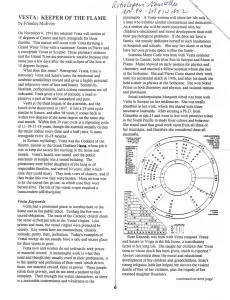
Vesta: Keeper of the Flame (1994)

Frances McEvoy, Special Collections

Asteroid Vesta, Grand Trine, Natal Astrological Analysis, Confinement and Solitude, Birth Data. This issue features an in-depth astrological analysis of the asteroid Vesta by Frances McEvoy, framed by Vesta’s November 1994 station at 10 degrees Cancer forming a Grand Water Trine with Saturn in Pisces and Venus in Scorpio. McEvoy explores Vesta’s 29-year cycle, its mythological roots as the Goddess of the Hearth, and its archetypal keywords such as commitment, chastity, solitude, purity, duty, perfection, and transcendent self-discipline. The article delineates how Vesta operates in both male and female charts, highlighting themes of dedicated work, privacy, and inner strength.

The study examines numerous chart examples illustrating Vesta’s impact on public service, science, art, and personal sacrifice. Detailed case studies include Marie Curie, Margaret Mead, Maria Montessori, Anne Frank, Sister Francesca Cabrini, Saint Therese of Lisieux, Queen Victoria, Grace Kelly, Jerry Brown, David Souter, Yassar Arafat, Oliver North, Angela Davis, Betty Friedan, Helen Keller, Michel Gauquelin, Bobby Fischer, and major classical composers like Bach, Mozart, Schubert, and Chopin. Themes of confinement, religious devotion, political zealotry, and intellectual immersion are thoroughly traced through Vesta’s aspects and house placements.

Additionally, Lorraine Welsh presents “The Data Base,” providing precise birth data for political candidates and public figures of the period, including Mitt Romney, Joe Malone, Paul Cellucci, and Pope John Paul II. An informational announcement for Robert Hand’s instructional classes on Traditional Western, Renaissance, and Hellenistic astrology is also included.

Issue Highlights:

Articles:
VESTA: KEEPER OF THE FLAME – Frances McEvoy
The Data Base – Lorraine Welsh

Discussion:
Vesta cycle and astronomical station patterns
Vesta in psychological, natal, and mundane astrology
Confinement, solitude, and religious devotion in chart analysis
Verified birth data for political candidates and notable figures
Instruction in Hellenistic and Renaissance traditional astrology

Chart data:
Maria Montessori
Yassar Arafat
Helen Keller
Mitt Romney
Joe Malone
Paul Cellucci
Pope John Paul II (Karol Wojtyla)

Notable contributors:
Frances McEvoy (Vesta: Keeper of the Flame)
Lorraine Welsh (The Data Base)
Robert Hand (Traditional Astrology Classes)

Mundane Astrology, Predictive Astrology, and Astrology History. This archival item is the October 1994 issue (82nd Edition) of Mercury Hour, a quarterly astrological magazine edited and published by Edith Custer in Lynchburg, Virginia. Key contents include Part 1 of Robert Zoller’s four-part series on Guido Bonatti and medieval European astrological literature, Van K. Golay’s mundane assessment of the “Soviet Power” regime and its post-1987 transformation, and Marc Penfield’s astrological analysis of natural disasters in California alongside chart profiles for Rodney King and O.J. Simpson. The issue features extensive coverage and reader discussions surrounding the O.J. Simpson murder case, featuring chart analyses and comparisons by T. Pat Davis, Karen Christino, Jim Haynes, Joseph S. deMello, John Somoza, and Edith Custer. Additional contributions include Dorothy Willis’s weather predictions for the 1994 Autumn Equinox, book reviews by Rose D. Owen, Edith Custer, Marc Penfield, and Ann Requa, and community discussions on solar return timing, death indicators, house representations of parents, and software/computer developments.


Issue Highlights


Book Reviews

The Eagle and the Lark (A Textbook of Predictive Astrology) by Bernadette Brady

– Rose D. Owen

Forecasting – Backward & Forward by Bruce Hammerslough

– [two reviews] Edith Custer and Marc Penfield

A History of Western Astrology by Jim Tester – Ann Requa


Articles

Crisis Alert [California natural disasters] – Marc Penfield

Autumn Equinox 1994 – Dorothy Willis

“Soviet Power” Dead or Alive? – Van K. Golay

Guido Bonatti and the Spread of Astrological Literature in Mediaeval Europe,

Sive, Pro Astrologica per se Studiendo, Part 1 of 4 – Robert Zoller

People [Rodney King; O.J. Simpson] – Marc Penfield


Discussions

O.J. Simpson case

Neptune

Transiting Saturn in Pisces (1994)

Timing in solar return charts

Locating death in a chart

House representation of parents

Bill Clinton/Whitewater


Chart data

Simpson, O.J.

O.J. Simpson case lawyers:

Cowlings, A.C.

Dershowitz, Alan

Lerner, Mark

Shapiro, Robert

Bundy, Ted

Candy, John

King, Rodney

Klaas, Polly

Davis, Richard Allen (abductor of Polly Klaas)

Los Angeles, CA (City & County)


Notable contributors

Carole Devine (astrological counseling; timing in solar returns)

Karen Christino (O.J. Simpson)

Lois Rodden (Michael Jackson birth time; continuation of chart after death)

Marion March (challenging aspects)

Astrological Techniques, Mundane Astrology, Historical Research. This 79th edition of Mercury Hour (January 1994) functions as a dynamic forum for practitioners to share research, personal experiences, and technical debates. A major focus throughout the issue is on natal chart rectification, the debate over house systems (specifically Lavagnini, Morinus, and Placidus/Koch), and the practical application of planetary transits and progressions to mundane events, such as the Israel-PLO accord, the Clinton presidency, and the Michael Jackson investigations. The issue also features a heavy emphasis on early American astrological history, with Robert Zoller exploring how astrology was utilized and viewed in pre-1860 American colonies and academic settings.

Technical discussions extend to specialized methodologies, including the evaluation of “accidental ascendants,” the use of Chaos Theory and septile aspects, and reviews of foundational translations like Paulus Alexandrinus. Contributors wrestle with the philosophical and ethical dimensions of the craft, debating whether astrology can be considered “from the devil” or if it serves as a valid system for psychological understanding and life navigation. The publication serves as a nexus for the community, highlighting professional conferences, software reviews (such as Matrix Software), and the ongoing efforts of Project Hindsight to recover ancient techniques.

Issue Highlights:
Articles:
Winter Solstice [1993] – Dorothy Willis
Introduction to M-13: Spiritual Theory, Part II, Conclusion – Defiance Gregg
Will Daniel Day-Lewis Get an Oscar? – Barbara Dunn
Is Astrology “From the Devil?” – Carole Devine
Open Letter of Complaint re the UAC Conference – Dorothy Martin
More Founding Dates, Part 3, Conclusion – Marc Penfield
Student Corner Rewrite [hemispheres of the chart] – Joseph S. DeMello
Student’s Corner, Part 2 of 2 [7th & 10th houses] – Annibale F. Verzumo
American Astrology Prior to 1860 – Robert Zoller
An Astrological Review of Passages, Part 5 of 6 – Bil Tierney
Computers – Joseph S. de Mello
A Review of Project Hindsight’s First Translation: Paulus Alexandrinus, Introductory Matters – Michele C. McKee

Discussion:
Lavagnini house system
Chart of Michael Jackson
Chart of Bill Clinton
Astrology & crime-solving
Evangeline Adams “accidental ascendant” technique
Chart of Baltimore, MD
Coming earth changes/polarity shift
U.S. Presidents & Chinese astrology
Universal Number/Chaos Theory/septile aspect
J. Edgar Hoover
Age of Aquarius

Chart data:
Henry, Patrick
Jackson, Michael
Koresh, David
Baltimore, MD
Israel/recognition of PLO

Notable contributors:
Lois Rodden (Bill Clinton and David Koresh birth charts, chart ratings)
Karen Christino (Saturn Return)
Marion March (Tropical vs. Sidereal)

Astrology, Horary, House Systems, Synastry, and Transits. This edition of Mercury Hour features extensive reader discussions and technical articles covering various astrological branches. Topics include an exploration of planetary speeds and Kepler’s theories by Donald E. Byrne, declination and out-of-bounds planets by Gilbert Navarro, synastry and musical charts comparing John Lennon, Paul McCartney, Richard Nixon, and Yoko Ono by Dianne Lawson, as well as a concluding critique of the Koch House System by M. J. Makransky. Additional articles cover astrolocality mapping variants, Russian history and charts by Annibale F. Verzumo, Vernal Equinox charts, I Ching trigrams, and book reviews covering computer software, house development, and planetary stations.

Issue Highlights:

Articles:
Where is Vulcan & Nemesis? Part I – Donald E. Byrne
John Lennon and Paul McCartney, Richard Nixon, and Yoko Ono – Dianne Lawson
The Last Word on the Koch House System and Further Critique of the Koch House System, Part II, Conclusion – M. J. Makransky
Precession of the Equinox – Donald E. Byrne
How to Make Astrology Pay From A-Z, Part II, Conclusion – Adze Mixxe
Variant Forms of Astrolocality Mapping, Part I – M. J. Makransky
[Russia] Part III, Conclusion – Annibale F. Verzumo
Vernal Equinox March 20, 1992 – Dorothy S. Willis
Corrections: The Book of World Horoscopes – Nicholas Campion
I Ching: The Trigrams-Fu Hai Arrangement – Dorothy J. Sarka

Discussion:
Transpluto/Pluto Square 1991 – 1993
December 21, 1991 lunar eclipse
Secondary progressions
CSICOP and Humanistic astrology
Antichrist and Judgement Day discussions
Gulf War charts and Horary missing articles

Chart data:
Bill Clinton
Paul Keating
John Lennon
Paul McCartney
Richard Nixon
Yoko Ono
Paul Tsongas

Notable contributors:
Marion March (problematic astrological terminology)
Gilbert Navarro (declination)
Lee Lehman (humanism and CSICOP)
Diana Rosenberg (Jeffrey Dahmer chart)
Edith Custer (defending astrology)

Ask A Librarian

Need assistance with your research or navigating our collection? Our library team is here to help.

Please fill out the form below with details about the topics, authors, or archival materials you are looking for, and one of our librarians will review your query and respond shortly.

Help

Whether you are looking for rare historical texts or trying to locate a specific book nearby, Alexandria iBase offers two primary ways to search. Here is how to choose the right tool for what you need:

The Library Catalogue

Think of this as your global master index.

The Catalogue works just like a traditional library search system, designed to help you locate books and media across the broader astrological landscape.

  • Physical Books: Find out where physical copies of books are held in libraries, archives, or collections near you.

  • Digital Files: Access downloadable or viewable digital editions when available.

  • Best Used For: Standard research, finding specific ISBNs or authors, and tracking down physical items in the real world.

Browse Catalogue

SPECIAL COLLECTIONS

Think of this as Alexandria’s exclusive private vault.

Collections gives you direct access to Alexandria’s own curated archive of rare, proprietary, and historic astrology media.

  • Exclusive Material: Features unique texts, manuscripts, audio recordings, and visual media that are not available anywhere else.

  • Direct Access: Digitized content ready to explore straight from the platform.

  • Best Used For: Deep-dive research, discovering hidden gems, and exploring rare, one-of-a-kind astrological resources.

Browse Special Collections

Cash & In-Kind Donations

Make a one-time or recurring tax deductible cash donation.

Payment options include donating directly with us, PayPal Giving and GoFundMe.

GoFundMe for Charities and PayPal Giving are registered for tax deductions and have no required processing fees. It does offer the option to tip.

Donate

*Subject to 2.5% processing fees

Contact Us

Have a question, feedback, or a inquiry about our archives? We’d love to hear from you. Please fill out the form below with your details and message, and a member of our team will get back to you as soon as possible.

Thank you for reaching out to the Alexandria iBase Project!