
Home » Semi-Sextile

Semi-Sextile

Semi-Sextile is a minor astrological aspect measuring 30 degrees, representing the distance of one whole sign on the zodiac wheel. Connecting adjacent signs that inherently possess entirely different elements and polarities, this aspect denotes a subtle friction or adjustment required between disparate energies. In chart interpretation, planets connected by a semi-sextile do not blend easily, forcing conscious effort to integrate their distinct drives and functional principles.

Filters

Filters


See more See less
See more See less
See more See less
See more See less
See more See less
See more See less
See more See less

Sorting

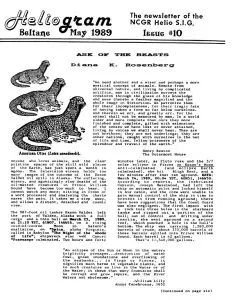
Heliocentric Astrology, Heliogram, NCGR Helio S.I.G., Mundane Astrology, Weather Prediction, Financial Astrology, Asteroids, Fixed Stars, Horary Astrology. This document is the May 1989 issue of the Heliogram, the newsletter of the NCGR Helio S.I.G. Edited by Margaret M. Meister and published with contributions from prominent heliocentric and mundane astrologers, the issue explores the intersections of heliocentric and geocentric astrology, weather forecasting, financial trends, and current world events. Articles delve into the environmental and astrological significance of the Exxon Valdez oil spill, incorporating fixed stars like Spica, Fomalhaut, and the constellation Cetus. Discussions extend to economic forecasts utilizing heliocentric horary charts, planetary alignments involving Mars, Saturn, and Uranus, and the usage of asteroids in mundane prediction. Historical analyses cover figures such as Vincent Wing, examining early heliocentric astrology and Keplerian mechanics. Comprehensive chart data and chronologies, including those for George Bush, nuclear disaster events like Three Mile Island and Chernobyl, and the Emperor Akihito, provide empirical depth to the technical explorations presented throughout the volume.

Issue Highlights:

Articles:
Ask of the Beasts – Diana K. Rosenberg
On File – Margaret M. Meister
Custer Corner: Some Thoughts On Helio – Edith Custer
New and Improved George Bush Chronology – Bill Meridian
Hello, Jupiter! – Barbara May
Elections, Nominations and Things That Go Bump in the Night – Margaret Meister, Edith Custer
Helio in the News – Zipporah Dobyns, Ph.D.
An Implausible Mars-Moon – T. Pat Davis
Emperor Akihito – Doris Greaves
Astrology and the Weather – Part V – Dorothy S. Willis
Doom Forestalled: A Study in Helio Horary – Susan Manuel
Bridge Collapse – Edith Custer
Helio History: Vincent Wing: The First Heliocentric Astrologer? – J. Lee Lehman, Ph.D.

Discussion:
Heliocentric planetary placements and comparative geo/helio charts
Mundane and economic forecasting via heliocentric horary charts
Astrological signatures of the Exxon Valdez oil spill and environmental disasters
Weather forecasting using heliocentric aspects (Venus, Mars, Jupiter, Saturn, Uranus, Neptune)
Historical analysis of heliocentric astronomy and astrology from Kepler to Vincent Wing

Chart data:
Exxon Valdez Oil Spill Chart (March 24, 1989)
Exxon Corporation Foundation Chart (August 10, 1892)
First Sustained Nuclear Reaction (December 2, 1942)
Three Mile Island Nuclear Power Plant Disaster (March 28, 1979)
Chernobyl Nuclear Plant Explosion (April 26, 1986)
Emperor Akihito Natal Chart (December 23, 1933)
Bridge Collapse, Covington, TN (April 1, 1989)
George Bush Natal Chart

Notable contributors:
Diana K. Rosenberg (Astrological zoology and environmental mundane charts)
Edith Custer (Helio Mercury configurations and structural chart observations)
Zipporah Dobyns (Asteroid placements and mundane events)
Susan Manuel (Heliocentric horary and economic predictions)
Dorothy S. Willis (Astrological weather forecasting)
J. Lee Lehman (Historical analysis of heliocentric astrology and Vincent Wing)
Barbara May (Heliocentric Jupiter placements)
Grand Configurations, Stelliums, T-Squares, Grand Trines, Yods, Mystic Rectangles, Astrological Aspects, Chart Configurations, Chart Patterns. This document is a comprehensive transcript of two 1.5-hour lectures by Marion D. March, focusing on major and minor astrological configurations, aspect patterns, and how to find the highest philosophical and spiritual potential in a chart. March explores how 3 or more planets joined by aspect form a definite pattern or ‘Gestalt’ that exerts an all-pervading and powerful force in a horoscope. Detailed rules for allowable orbs are discussed, emphasizing that tighter orbs yield stronger effects. Major aspect patterns covered include the Stellium, Grand Square (Grand Cross), T-Square, Grand Trine, Kite, Inconjunct, Yod (Finger of God), Mystic Rectangle, and Grand Sextile, alongside minor configurations derived from midpoints, semi-squares, and semi-sextiles. Concrete celebrity chart examples are analyzed for each configuration: Louis Pasteur for the Stellium, Albert Schweitzer for the Fixed Grand Square, Marlon Brando for the T-Square, Angela Davis for the Grand Trine, and Walt Disney for the Yod.

Issue Highlights:

Articles:
Grand Configurations and How to Find the Highest Philosophical and Spiritual Potential in a Chart – Marion D. March

Discussion:
Stelliums and Conjunctions in the 1st House
Grand Squares across Cardinal, Fixed, and Mutable Qualities
T-Squares and the Significance of the Focal Planet and Empty Opposition
Grand Trines across Fire, Earth, Air, and Water Elements
Yods (Finger of God) and Inconjunct (Quincunx) Dynamics
Midpoint Structures and Minor Configurations

Chart data:
Louis Pasteur (12/22/1822)
Albert Schweitzer (1/14/1875)
Marlon Brando (4/3/1924)
Angela Davis (1/26/1944)
Walt Disney (12/5/1901)

Notable contributors:
Marion D. March (Author and Lecturer on Astrological Configurations)

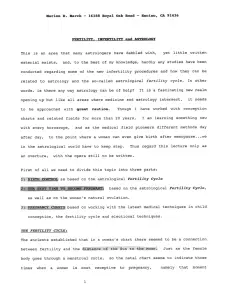
Fertility, Infertility, and Astrology, Astrological Fertility Cycle, Dr. Eugen Jonas, Birth Control, Electional Pregnancy Charts, In Vitro Fertilization, Artificial Insemination, GIFT, ZIFT. Marion D. March explores the intersection of medical procedures and astrological fertility cycles, noting that while the topic needs great caution, the astrological fertility cycle based on the Sun-Moon distance at birth can be remarkably effective for timing pregnancy. The text outlines three main divisions: birth control using the cycle (which March cautions is unreliable), determining the best time to become pregnant via personalized fertility dates and electional rules, and timing pregnancies through modern medical techniques such as artificial insemination and in-vitro fertilization.

Issue Highlights: Comprehensive lecture notes and case studies focusing on the practical application of astrological fertility cycles, detailed computer-generated fertility lists, and step-by-step chart interpretations for a client named Mindy.

Articles:
Fertility, Infertility and Astrology – Marion D. March

Discussion:
The validity and unreliability of astrological birth control
Calculating the fertility cycle based on the Sun-Moon distance from the natal chart
Using electional astrology and lunar aspects for conception and medical implantation
Correlating moon signs with the biological prediction of a baby’s gender
Applying fertility timing to modern medical procedures like IVF, GIFT, and ZIFT

Chart data:
Mikki March Andina (Michele Dia March)
Mindy’s Fertility Charts (#1, #2, #3, #3A, #4, #7, #7A)

Notable contributors:
Marion D. March (Author and Astrologer)
Dr. Eugen Jonas (Czechoslovakian gynecologist and astrologer known for his work on fertility cycles)

Astrology Terms German and English

Marion D. March, Special Collections

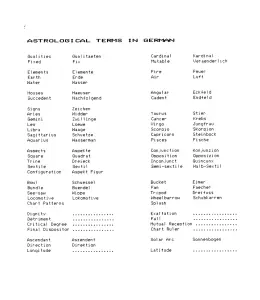
Astrological Terms in German, Qualities, Elements, Houses, Signs, Aspects, Chart Patterns, Dignities, Ascendant, Solar Arc. This document provides a comprehensive bilingual reference guide translating core astrological terminology from English into German. It covers fundamental structural components of astrology, including the zodiac qualities (Cardinal, Fixed, Mutable), elemental classifications (Fire, Earth, Air, Water), house types (Angular, Succedent, Cadent), and the complete set of twelve zodiac signs from Aries to Pisces. Furthermore, the text systematically translates major and minor aspects (Conjunction, Square, Opposition, Trine, Inconjunct, Sextile, Semi-sextile), planetary configurations, and specific Marc Jones chart patterns such as Bowl, Bundle, See-saw, Locomotive, Bucket, Fan, Tripod, Wheelbarrow, and Splash. Essential astrological conditions including dignity, detriment, exaltation, fall, critical degree, mutual reception, and final dispositor are also mapped, alongside structural chart points like the Ascendant, Direction, Longitude, Latitude, and Solar Arc (Sonnenbogen).

Issue Highlights:

Articles:
N/A – N/A

Discussion:
Translation of astrological terms from English to German
Zodiac signs, elements, and qualities in German
Aspects and chart patterns terminology

Chart data:
N/A

Notable contributors:
Marion D. March

Mundane Astrology, Astrology History, and Astrological Techniques. This archival item is the October 1990 issue (66th Edition) of Mercury Hour, a quarterly astrological magazine edited and published by Edith Custer in Lynchburg, Virginia. Featured articles in this issue include Marc Penfield’s solar chart analysis of Donald Trump and natal study of Greta Garbo, Part I of M.J. Makransky’s series correlating zodiacal degrees with geographical locations and political shifts in Guatemala, Robert Baumgartner’s examination of a Demotic astrological text regarding the Egyptian star Sothis, Joseph S. DeMello’s instructional guide on diurnal charts, Paul Hewitt’s analysis of the 1989 Eastern European revolutions, and T. Pat Davis’s geo-helio study of the 1901 Texas oil discovery at Spindletop. Additional contents include reviews of Alan Oken’s Soul-Centered Astrology and Margaret Millard’s The Genetics of Astrology, weather forecasts by Dot Willis, and historical discussions regarding Tycho Brahe’s birth chart, the Society for the Advancement of Astrology, the 1992 Philippine presidential election, and birth data for figures including Saddam Hussein and Kenneth Branagh.


Issue Highlights


Book Reviews


Soul-Centered Astrology: A key to the expanding Self by Alan Oken – Marguerite dar Boggia


The Genetics of Astrology by Margaret Millard – Teresa Hamilton


Articles


The Great Garbo: Sphinx or Siren? – Marc Penfield


Guatemala, Part I – M.J. Makransky


The Egyptian Sothis in Gemini – A Demotic Astrological Text, Part I – Robert Baumgartner


Saturn, Our Night-Light, Part I – Ann Foley


Living the Hero’s Journey, Part I – Carol Voeth-Lavoie


Diurnal Charts – Joseph D. DeMello


Next Philippine President – Serafin Lanot


Autumn Ingress, September 23, 1990 – Dot Willis


Students Corner: Aspects – Anne Toth


[Essential charts of Chicago], Part I – Sonja Foxe


Saturn Anxiety, Part I – Carole Devine


Donald Trump: His Solar Chart – Marc Penfield


Eastern Europe – The Revolution of 1989, Part I – Paul Hewitt


Texans Discover Oil – T. Pat Davis


Discussions


Ethics of predicting death


Chart of Tycho Brahe


History of the Society for the Advancement of Astrology

Sun sign columns


Polio vaccine/SV-40 virus/AIDS

Warren and Florence Harding


Neptune transit of Capricorn


Chart of San Francisco Astrolocality Page 2 of 2


Chart data
(some incomplete or in question)

Iraq
Kuwait
Saudi Arabia
United Arab Emirates
San Francisco, CA
Common Market/EEC

Brahe, Tycho
Branagh, Kenneth
Griffith, Melanie
Hussein, Saddam
Linares, Enrico
Quayle, Dan
Stuart, Matthew & related charts

Notable contributors

Joe DeMello (the semi-sextile aspect)
Marion March (Joan Quigley’s involvement with the Reagans)
Kay Shinker (solar returns)
Lois Rodden (chart data)
Frances McEvoy (Matthew Stuart/Boston murder case)

Astrology Community, Mundane Astrology, and Astrology History serve as the primary focus areas of this historical astrological literature. This archival item is the October 1991 issue (70th Edition) of Mercury Hour, “The Astrologer’s Astrological Magazine,” a reader-driven correspondence periodical edited and published by Edith Custer of Lynchburg, Virginia. Structured largely as an open forum of subscriber letters, it documents the working preoccupations of a grassroots American astrological community, with debates over classical versus modern technique, chart-matching blind tests, and the interpretation of stations, midpoints, solar returns, and heliocentric charts. Reflecting its Gulf War moment, the issue features mundane analysis of the Gulf War chart, the USSR’s dissolution, and comparative studies of Saddam Hussein, Jim Jones, and Adolf Hitler; alongside contributions from Ted George, M.J. Makransky, Joyce Wehrman, and Lee Lehman, a memorial for statistical researcher Michel Gauquelin (1928-1991), chart data for figures such as Napoleon and Helen Herron Taft, and period advertisements for early astrological software that capture the field’s transition into desktop computing.

Issue Highlights


Book Review

Working with Astrology by Michael Harding & Charles Harvey – Doris Greaves


Articles

Missing Visa Book – Marie DeLeone

Student’s Corner [the Ascendant] – Annibale F. Verzumo

Jupiter-Neptune, The Celestial Twins, Part I – Ted George

NCGR Conference [report] – Edith Custer

Indications of a Winner *or* Do You Have a Gambling Chart? – Cammille Adams

Planet Watch – Paul O. Hewit

The Natural Disposition, Part II – M.J. Makransky

Michel Gauquelin 1928-1991 – J. Lee Lehman

[USSR charts] Part I – Annibale Verzumo

The Three Amigos, Part II, Conclusion [Saddam Hussein, Jim Jones, Adolph Hitler]– Susan J. Kientz

[Risks of publishing astrological materials] Part II, Conclusion – C. J. Puotinen

Central American Data – M.J. Makransky

Her Proudest Moment [Helen Herron Taft] – T. Patrick Davis

Pluto, Part II, Transpluto – Joyce Wehrman [transcription of talk]

The Gemini Theme, Using the Astrological Language, Part III, Conclusion – Anne Foley

Autumn Equinox September 23, 1991 – Dorothy S. Willis


Discussions

Astrological weather prediction

Solar returns

Chart of Napoleon

Neptune

Gulf War chart

Heliocentric charts

Finding the time of sunrise in birthchart


Chart data

Bonaparte, Napoleon
Taft, Helen Herron
Iraq War
Costa Rica
El Salvador
Guatemala
Honduras
Nicaragua


Notable contributors

Marion March (semi-sextiles)

Lee Lehman (classical astrology techniques; homosexuality & astrology)

Marc Penfield (the astrology of Orlando, FL & Disney World)

Ask A Librarian

Need assistance with your research or navigating our collection? Our library team is here to help.

Please fill out the form below with details about the topics, authors, or archival materials you are looking for, and one of our librarians will review your query and respond shortly.

Help

Whether you are looking for rare historical texts or trying to locate a specific book nearby, Alexandria iBase offers two primary ways to search. Here is how to choose the right tool for what you need:

The Library Catalogue

Think of this as your global master index.

The Catalogue works just like a traditional library search system, designed to help you locate books and media across the broader astrological landscape.

  • Physical Books: Find out where physical copies of books are held in libraries, archives, or collections near you.

  • Digital Files: Access downloadable or viewable digital editions when available.

  • Best Used For: Standard research, finding specific ISBNs or authors, and tracking down physical items in the real world.

Browse Catalogue

SPECIAL COLLECTIONS

Think of this as Alexandria’s exclusive private vault.

Collections gives you direct access to Alexandria’s own curated archive of rare, proprietary, and historic astrology media.

  • Exclusive Material: Features unique texts, manuscripts, audio recordings, and visual media that are not available anywhere else.

  • Direct Access: Digitized content ready to explore straight from the platform.

  • Best Used For: Deep-dive research, discovering hidden gems, and exploring rare, one-of-a-kind astrological resources.

Browse Special Collections

Cash & In-Kind Donations

Make a one-time or recurring tax deductible cash donation.

Payment options include donating directly with us, PayPal Giving and GoFundMe.

GoFundMe for Charities and PayPal Giving are registered for tax deductions and have no required processing fees. It does offer the option to tip.

Donate

*Subject to 2.5% processing fees

Contact Us

Have a question, feedback, or a inquiry about our archives? We’d love to hear from you. Please fill out the form below with your details and message, and a member of our team will get back to you as soon as possible.

Thank you for reaching out to the Alexandria iBase Project!