Astrological Practice

Astrological Practice

Astrological Practice refers to the applied, client-facing execution of horoscopic analysis, consulting methodologies, and technical chart interpretation in professional settings. Distinguishing professional application from theoretical research, this domain encompasses the practical workflows of the practitioner, including natal chart delineation, predictive forecasting, client intake protocols, and specialized consulting techniques. Within library and archival classification, this category organizes professional handbooks, client consulting guides, case study compilations, and instructional literature detailing the operational methodologies, diagnostic frameworks, and practical tools used by practicing astrologers.

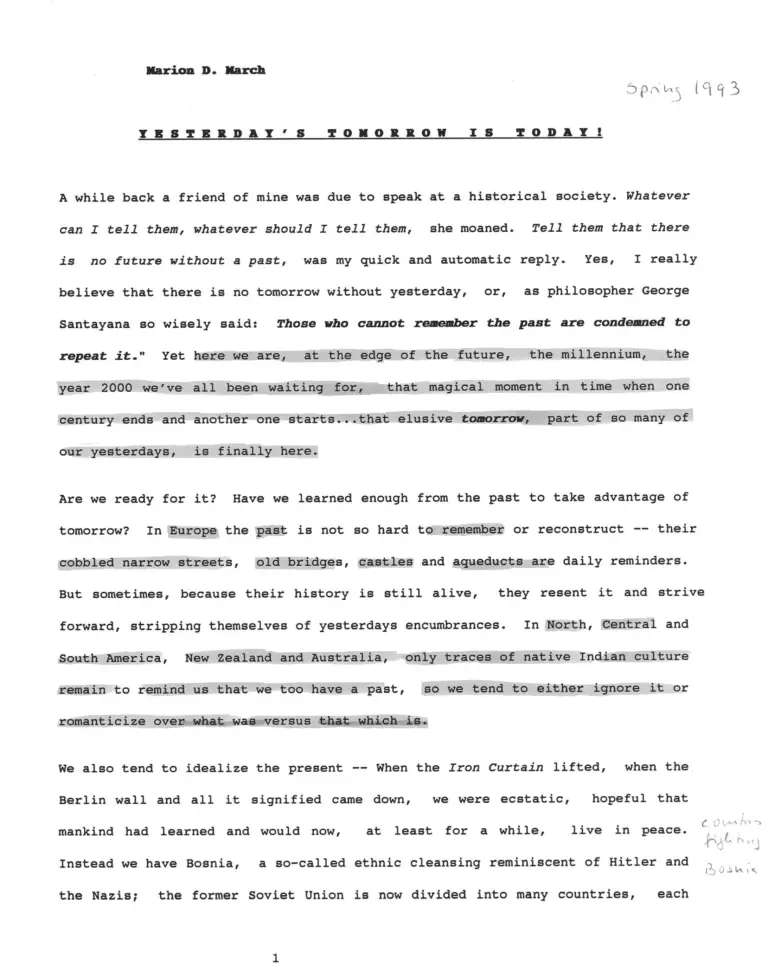
Yesterday’s Tomorrow is Today (1993)

Electional Astrology, Astrological Practice, and Timing Techniques. This archival manuscript contains the text of a lecture titled “YESTERDAY’S TOMORROW IS TODAY!” by Marion D. March (1993). March reflects on the evolution of modern astrology, evaluating how the integration of psychological principles and computing technology has transformed traditional chart interpretation. She cautions astrologers against completely discarding foundational methods, advocating for the integration of traditional timing techniques—such as electional and horary astrology—alongside modern psychological models. Additionally, March outlines upcoming societal and economic shifts, referencing the transitional outer planet transits of Uranus, Neptune, and Pluto heading into the late 1990s and 21st century.

View

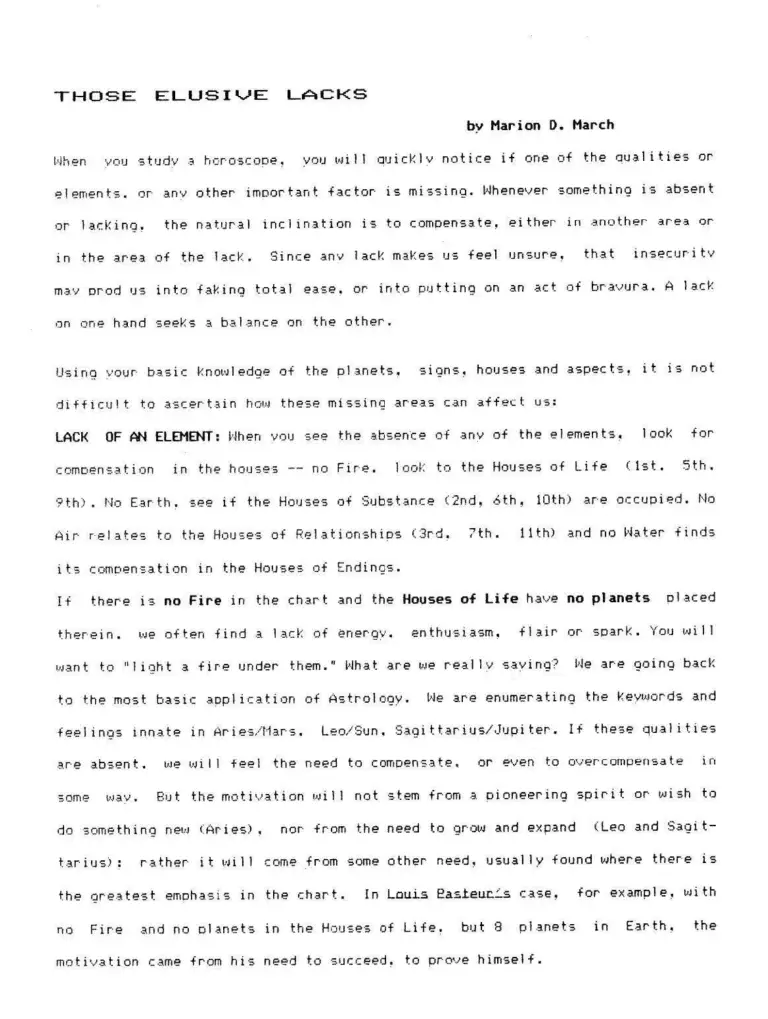
Those Elusive Lacks

Astrological Practice, Astrological Chart Analysis, and Delineation. This archival document is an instructional reference guide titled “THOSE ELUSIVE LACKS” by Marion D. March. March examines how the absence of specific astrological components (elements, qualities, house emphasis, aspects, or active planetary placements) influences human behavior and psychological development. She explains that individuals naturally compensate or overcompensate for missing elements by using house placements or rising signs. The text details the specific behavioral consequences of lacking elemental groups (Fire, Earth, Air, Water), missing sign qualities (Cardinal, Fixed, Mutable), unoccupied house categories, unaspected planets, and missing major aspects such as squares, oppositions, and quincunxes, illustrating each concept with real-world chart examples of notable historical figures.

View

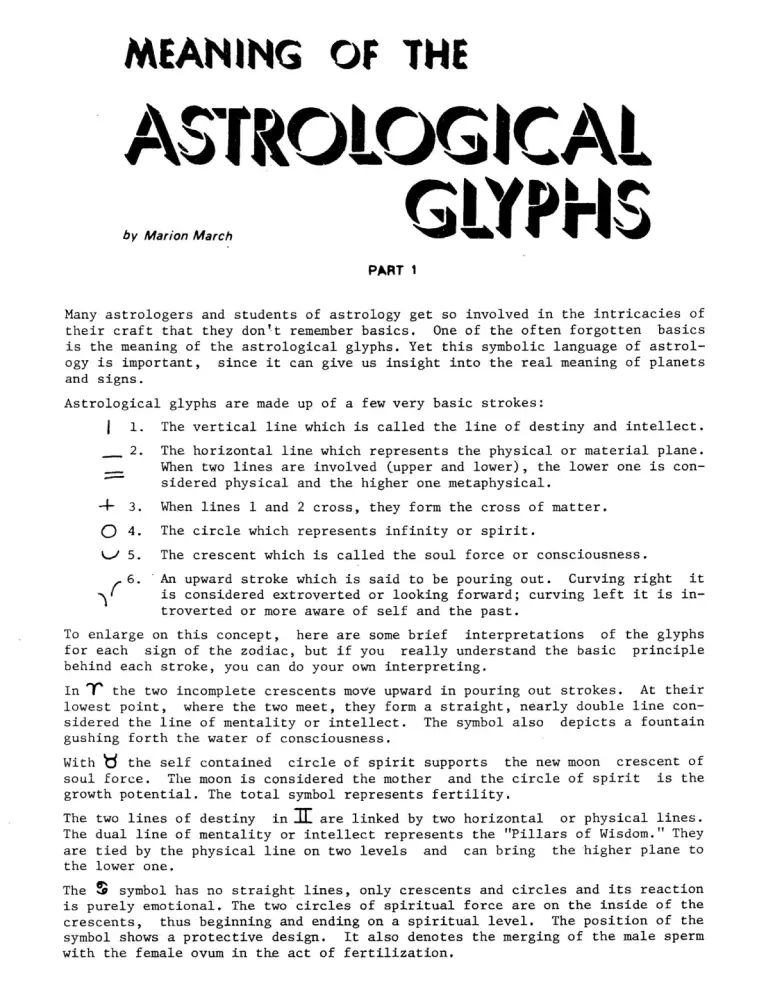
The Meaning of The Astrological Glyphs

Astrological Glyphs, Astrological Symbolism, and Astrological Practice. This archival document is a two-part article titled “MEANING OF THE ASTROLOGICAL GLYPHS” by Marion D. March. March breaks down the fundamental linear and geometric components that constitute astrological symbols: the vertical line of destiny/intellect, the horizontal line of matter, the cross of matter, the circle of spirit, and the crescent of soul consciousness. In Part 1, she delineates the symbolic meanings behind the glyphs of all twelve zodiac signs, explaining their psychological, emotional, and spiritual implications. In Part 2, March analyzes the planetary glyphs, detailing how the structural interaction of spirit, matter, and soul consciousness defines the operational nature of each planet, and illustrates how combining planetary and sign glyph interpretations provides insight into individual evolutionary paths.

View

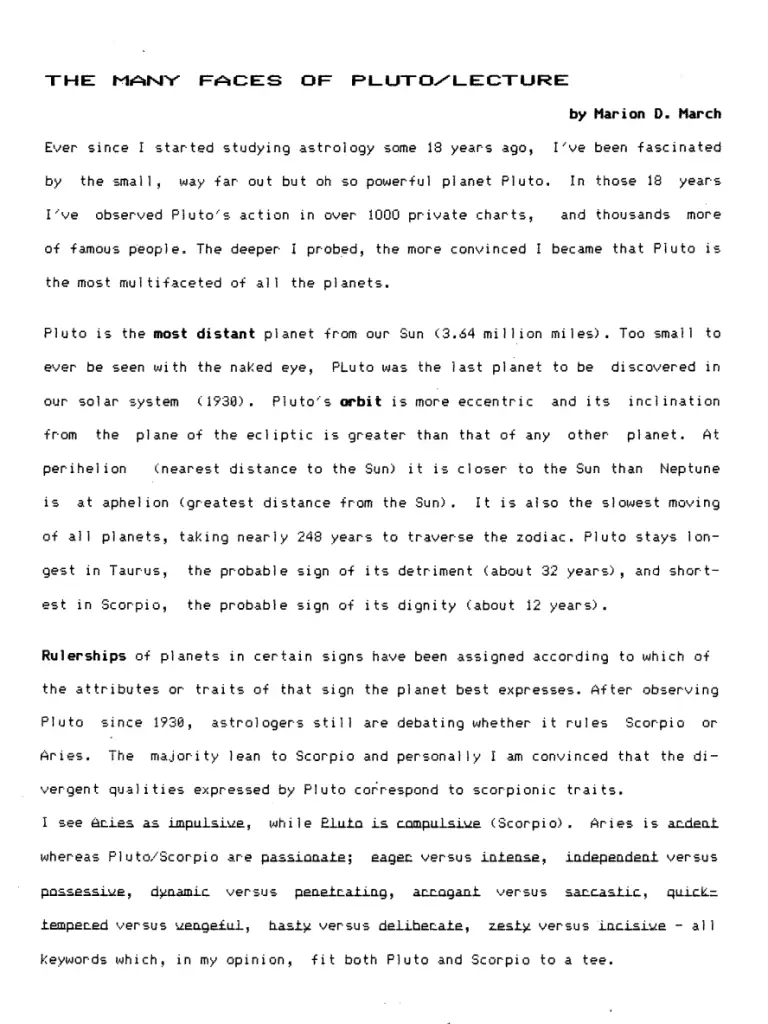
The Many Faces of Pluto (ca. 1983)

Pluto, Astrological Practice, and Delineation. This archival document is a lecture paper titled “THE MANY FACES OF PLUTO” by Marion D. March (ca. 1983). March presents a comprehensive analysis of the planet Pluto, exploring its astronomical discovery, glyph variations, mythological origins, and psychological manifestations. She examines Pluto’s core thematic expressions, including power, transformation, secretiveness, financial wealth, and intense desire natures, while analyzing how Plutonian energy operates through all twelve astrological houses and zodiac signs. The document features practical natal chart examples, historical sign transits, and specific delineations detailing Pluto’s impact on personal character, psychological integration, and collective generational trends.

View

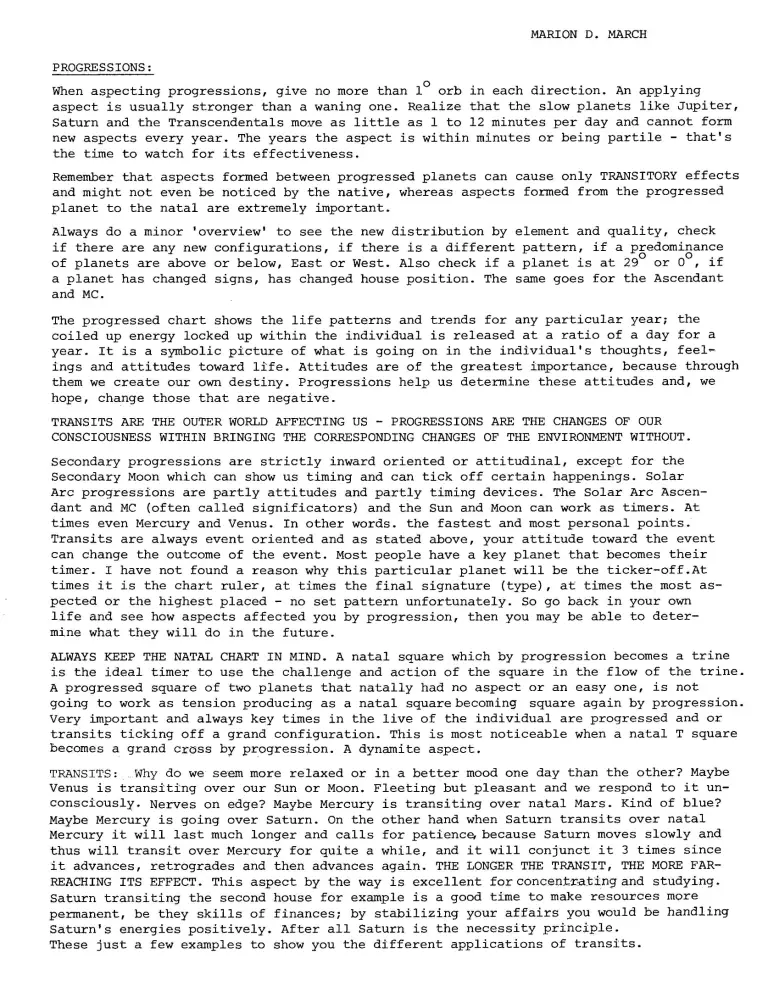
Progressions, Solar Arcs, and Transits (One-Page Summary)

Predictive Astrology, Timing Techniques, and Astrological Practice. This archival document is a one-page instructional guide titled “PROGRESSIONS, SOLAR ARCS, AND TRANSITS” by Marion D. March. March synthesizes the core operational differences between secondary progressions, solar arc directions, and transits. She defines transits as external environmental forces, secondary progressions as shifts in internal consciousness and attitude, and solar arcs as hybrid tools reflecting both psychological shifts and timing events. The sheet covers practical calculation guidelines, including a strict $1^\circ$ orb for progressions, checking critical $0^\circ$ and $29^\circ$ degrees, evaluating sign and house shifts, and prioritizing aspects formed between progressed planets and the natal chart over progressed-to-progressed aspects. Additionally, March details the activation of natal configurations (such as a natal T-Square resolving into a progressed Grand Cross) and explains the duration and impact of transits.

View

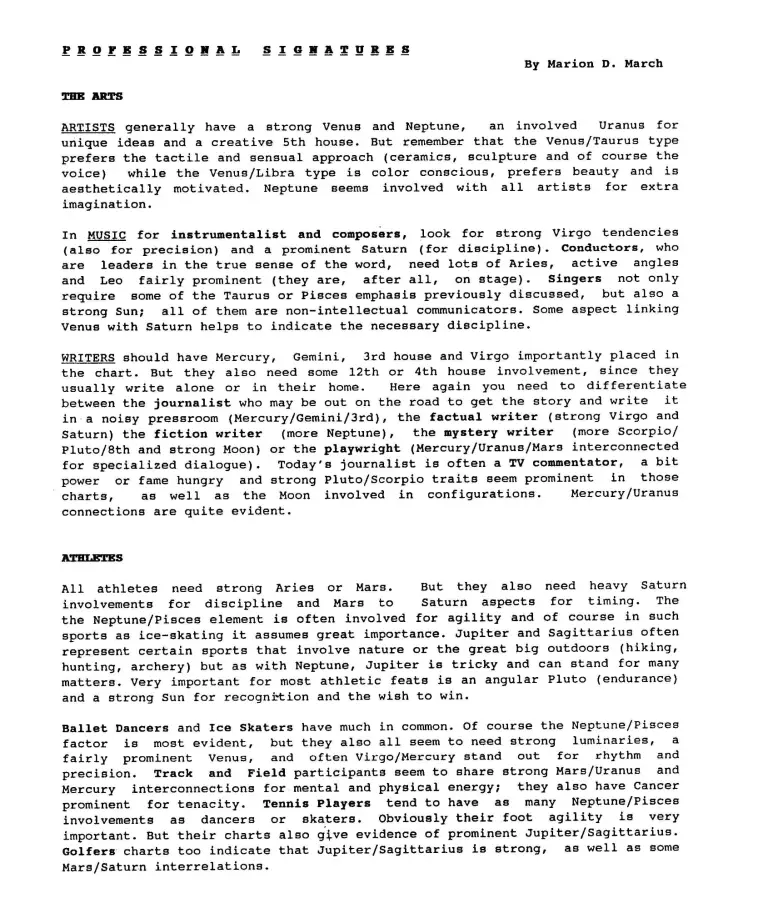
Professional Signatures

Applied Astrology, Astrological Practice, and Career Analysis. This archival document is an instructional reference guide titled “PROFESSIONAL SIGNATURES” by Marion D. March. March outlines specific planetary placement rules, zodiacal emphases, and house dynamics corresponding to various career fields. The text provides vocational indicators across multiple professions, including the arts (visual artists, composers, conductors, singers, and writers), athletics (dancers, skaters, track athletes, tennis players, and golfers), business, legal careers (criminal lawyers, judges, corporate attorneys), religion, medicine (surgeons, pediatricians, nurses, researchers), politics, acting, aviation/spaceflight, and astrology.

View

Ask A Librarian

Help

Whether you are looking for rare historical texts or trying to locate a specific book nearby, Alexandria iBase offers two primary ways to search. Here is how to choose the right tool for what you need:

The Library Catalogue

Think of this as your global master index.

The Catalogue works just like a traditional library search system, designed to help you locate books and media across the broader astrological landscape.

  • Physical Books: Find out where physical copies of books are held in libraries, archives, or collections near you.

  • Digital Files: Access downloadable or viewable digital editions when available.

  • Best Used For: Standard research, finding specific ISBNs or authors, and tracking down physical items in the real world.

Browse Catalogue

SPECIAL COLLECTIONS

Think of this as Alexandria’s exclusive private vault.

Collections gives you direct access to Alexandria’s own curated archive of rare, proprietary, and historic astrology media.

  • Exclusive Material: Features unique texts, manuscripts, audio recordings, and visual media that are not available anywhere else.

  • Direct Access: Digitized content ready to explore straight from the platform.

  • Best Used For: Deep-dive research, discovering hidden gems, and exploring rare, one-of-a-kind astrological resources.

Browse Special Collections

Cash & In-Kind Donations

Make a one-time or recurring tax deductible cash donation.

Payment options include donating directly with us, PayPal Giving and GoFundMe.

GoFundMe for Charities is registered for tax deductions and has no required processing fees. It does offer the option to tip.

Contact Us